What is it, exactly?
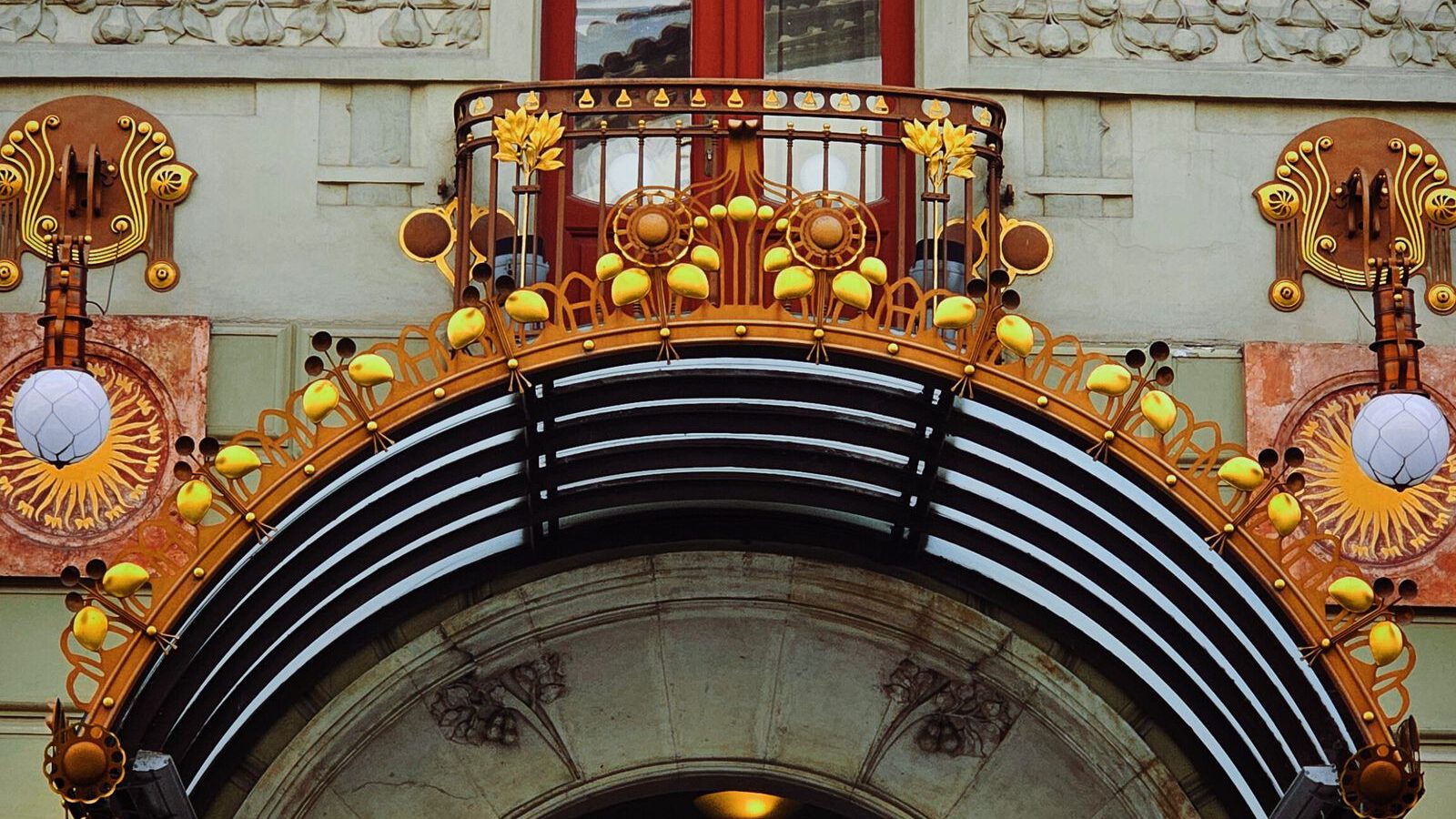
Tucked into the Trieste district north of the centre, Quartiere Coppedè is a tiny cluster of around forty buildings dreamed up by architect Gino Coppedè in the 1910s and 1920s. It’s a wild mash-up of Art Nouveau (Liberty), medieval, Baroque and even ancient-Greek motifs: turrets, gargoyles, fairy-tale frescoes, a wrought-iron chandelier arch over the entrance, and a “Fountain of the Frogs” at its heart in Piazza Mincio. There is no ticket booth and no signpost trail — it’s simply a real, lived-in neighbourhood that happens to look like a film set. (The Beatles reportedly splashed in that frog fountain after a 1965 gig.)
Is it worth visiting?
If you like architecture that doesn’t take itself too seriously, absolutely. It’s small — you can see the core in 30–45 minutes — but it’s unlike anything else in a city dominated by ancient marble and Baroque churches, and it’s blissfully uncrowded compared with the centre. It rewards looking up: every façade hides a detail, from spiders and suns to hand-painted saints. Come for the novelty of a corner of Rome that feels like a fever dream, stay for the quiet, elegant streets around it.
How do you get there?
The heart of the quarter is the entrance arch on Via Tagliamento, leading into Piazza Mincio. Trams 3 and 19 stop close by (around Piazza Buenos Aires / Via Tagliamento), and buses such as the 63 and 83 run nearby. From Metro Line B’s Policlinico stop it’s roughly a 20-minute walk, or a short tram hop. It’s an easy add-on if you’re visiting the Villa Torlonia or Villa Ada parks.
When to go, and what it costs
Free — it’s a public neighbourhood, open at all hours. Daytime is best for seeing the detail and colours; late afternoon light flatters the façades. Because people actually live here, keep noise down and don’t block doorways. Allow 30–60 minutes, more if you like photographing every gargoyle. There’s nothing to book.
Insider tip
Start under the big wrought-iron arch on Via Tagliamento so the reveal into Piazza Mincio hits you all at once, then look up and behind the arch — the giant iron chandelier is easy to miss. Bring a wide phone lens or step back across the square; the best buildings (the Palazzo del Ragno with its spider, and the “Fairy Houses”) are too tall and too close to fit in otherwise.