You can spend €25 on a mediocre carbonara at a tourist trattoria near a monument, or €10 grazing across a covered market where the queue is all locals on their lunch break. In Testaccio, the choice makes itself.
What is it, exactly?
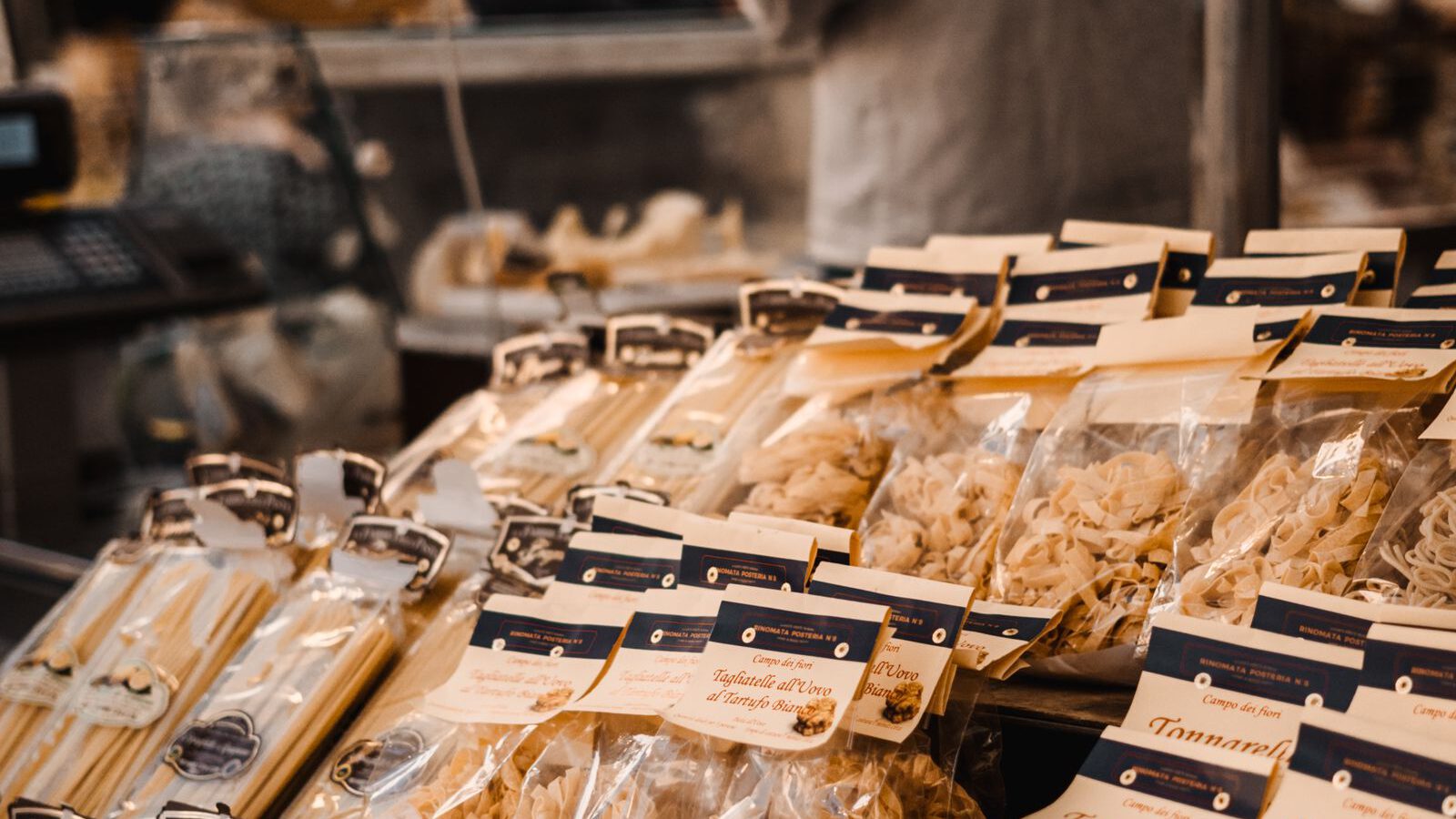
Mercato di Testaccio is the neighbourhood food market of Testaccio, historically Rome’s working-class butchers’ district and the birthplace of much of the city’s gutsy, offal-heavy cucina romana. It moved into a purpose-built modern hall in 2012, but the traders and the recipes go back generations. Under one roof sit 100-plus numbered stalls: fruit and veg, cheese and salumi, fresh pasta, kitchenware and clothes — and, crucially, a ring of small food counters turning out some of the best cheap eats in Rome. It’s a real working market where residents do their weekly shop, not a food court dressed up for visitors.
What to order (and how to play it)
The winning move is to graze: buy one thing at a counter, eat it standing, move to the next. A rough hit-list of Roman classics to look for:
- Supplì — fried rice croquettes with a molten mozzarella heart; the Roman cousin of the arancino, and a benchmark of any good market.
- Trapizzino — a triangular pocket of pizza dough (invented in Testaccio) stuffed with slow-cooked fillings like chicken cacciatora or polpette al sugo.
- Pizza al taglio — pizza by the slice, sold by weight; point to what you want and say how much.
- Porchetta roll — herb-roasted pork carved into a crusty panino.
- Panino con l’allesso — the old-school boiled-beef sandwich dunked in its own broth, a proper Testaccio survivor for the curious.
Don’t fill up at the first stall. Split things, share, keep room, and finish with a slice you point at rather than a whole plate you regret.
Is it worth it — instead of a restaurant?
For value and authenticity, many Romans would say yes. You eat the same dishes a trattoria serves, at market prices, surrounded by people who actually live here. It also anchors a genuinely good food-and-history morning, because Testaccio is dense with things to pair it with — the Monte dei Cocci (also called Monte Testaccio), an artificial hill built entirely from the shards of an estimated 53 million ancient Roman amphorae; the old slaughterhouse (Mattatoio) turned arts complex; and the Non-Catholic Cemetery and Centrale Montemartini both within walking distance.
One counter worth seeking out if it’s still trading when you visit is the long-running Mordi e Vai, famous for that broth-dunked boiled-beef allesso panino and other slow-cooked Roman fillings — the sort of gutsy, old-Testaccio cooking that’s getting harder to find. Stalls do come and go, so treat any single name as a suggestion rather than a promise, and let the queue of locals guide you: the counter with a line of Romans waiting at 12.30pm is almost always the one to join.
Getting there and timing it
The hall occupies the block bounded by Via Beniamino Franklin and Via Aldo Manuzio. Nearest Metro is Piramide (Line B), about a 12–15 minute walk; trams, buses and Roma Ostiense station also serve the area. On timing: it runs Monday to Saturday, roughly 7am to early afternoon (about 2.30pm weekdays, closer to 3.30pm on Saturday), and is closed Sundays. Individual stalls set their own hours — some food counters don’t fire up until 9am, a few close Mondays — so aim for mid-to-late morning, around 11am to 1pm, when every counter is open, the produce is still piled high and it’s at its liveliest. Get there before 1pm; the fresh-produce traders start packing up in the early afternoon and the popular food stalls can sell out.
Insider tip
The stalls are numbered on a grid, so if you’ve read about a specific counter, note its box number rather than trying to eyeball it in the bustle. Bring a little cash for the smallest vendors even though many now take cards, and grab a coffee standing at the bar the Roman way — ordered and downed at the counter, not lingered over at a table. Entry costs nothing; you only pay for what you eat and buy, and a full grazing lunch across a few counters runs roughly €8–15. If you want the backstory behind the offal traditions and which stall does the best supplì, a guided tasting turns a random graze into an actual lesson in Roman food.