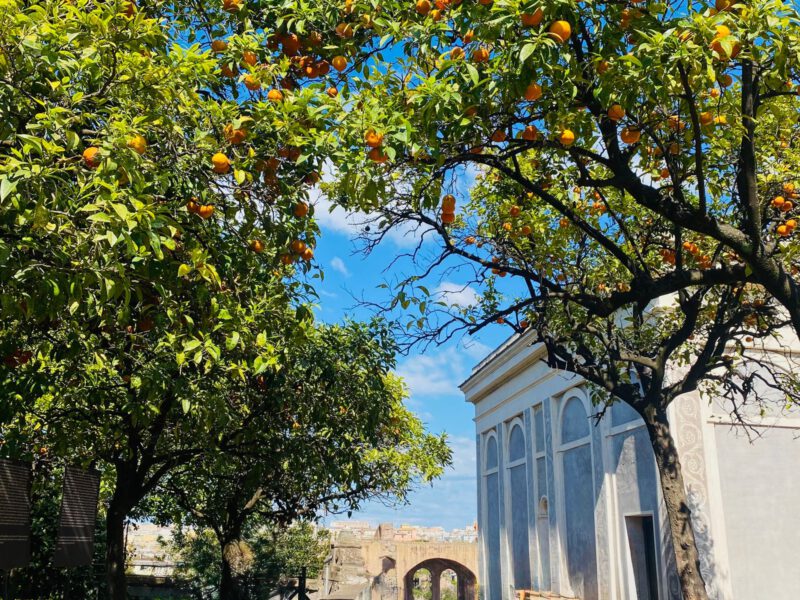
Testaccio is loud, working-class and obsessed with food, which makes what lies behind one of its walls all the more surprising: a steep garden of cypresses, roses and moss-covered stone where two English Romantic poets are buried in the shadow of a white marble pyramid. Most visitors on the Colosseum-to-Trevi circuit never come near it. The cats, the gardeners and a steady trickle of literature lovers have it largely to themselves.
A burial ground for Rome’s outsiders
For centuries, Catholic Rome would not bury Protestants, Orthodox Christians, Jews or non-believers in consecrated ground. The Cimitero Acattolico, the Non-Catholic Cemetery for Foreigners, often called the Protestant or English Cemetery, grew up to fill that gap. According to the cemetery, its history goes back to at least 1716, when Pope Clement XI let members of the exiled Stuart court be buried in front of the pyramid. The earliest surviving grave dates from 1738.
Through the 18th and 19th centuries it filled with young Grand Tourists who died far from home, along with diplomats, painters, scholars and exiles of every nationality. It is still an active cemetery, privately run and funded without state money, and it calls itself one of Europe’s oldest burial grounds still in use. The site has two halves: the flat Old Cemetery, a lawn of scattered tombs beside the pyramid, and the newer section that climbs in terraces up to the Aurelian Walls.
Keats, Shelley and the graves to find
- John Keats, who died in Rome in 1821 aged 25, lies in the Old Cemetery. At his own wish the stone carries no name, only a lyre and the line “Here lies One Whose Name was writ in Water”. His friend the painter Joseph Severn lies beside him.
- Percy Bysshe Shelley, drowned off the Italian coast in 1822, has his ashes high up near the wall, under a plain slab inscribed Cor Cordium, “heart of hearts”.
- Antonio Gramsci, the Marxist thinker imprisoned under Mussolini, whose ashes rest in the newer part of the cemetery.
- August von Goethe, the son of the German poet, who died in Rome in 1830.
- The Angel of Grief, carved in 1894 by the American sculptor William Wetmore Story for his wife’s grave, where he too was buried. An angel collapsed in weeping over an altar, it has been copied in cemeteries around the world.
Keats and Shelley are signposted, but many of the loveliest monuments are not. The cemetery publishes a zone-by-zone map on its website, and you can buy a printed copy at the Visitors’ Centre by the entrance, with the money going to upkeep. A few minutes spent with the map saves a lot of wandering.
The pyramid next door
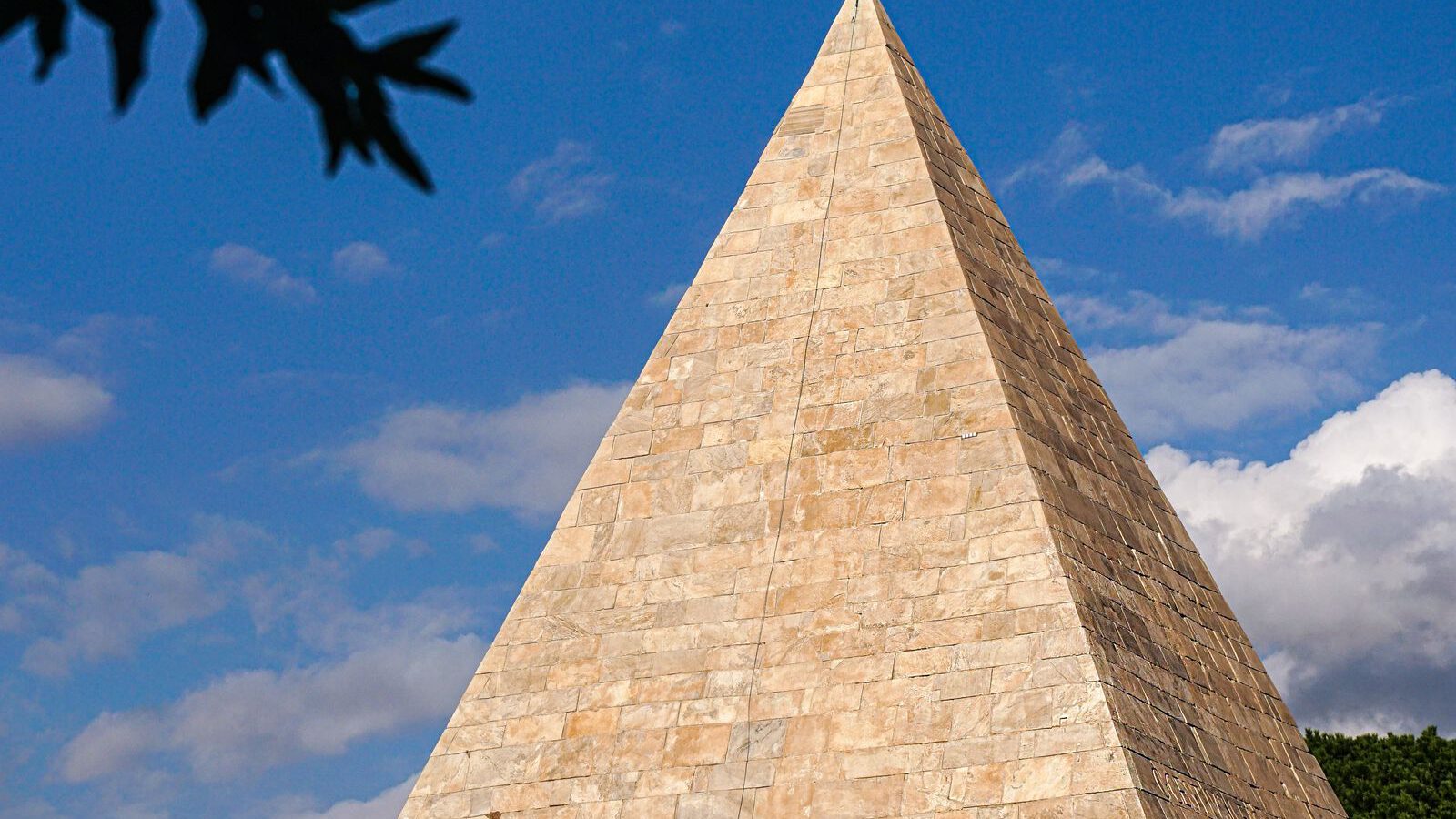
Looming over the Old Cemetery is the Pyramid of Cestius, a marble-clad tomb roughly 37 metres high, built between about 18 and 12 BC for Gaius Cestius, a Roman magistrate caught up in the Egypt craze that followed the conquest of Egypt. When the Aurelian Walls went up in the 270s AD, the pyramid was built into them, and that is a big reason it survived. You can see it beautifully from inside the cemetery, but the burial chamber itself opens only on scheduled dates. After recent restoration, free visits by reservation were running on weekends through 31 October 2026, booked via the Soprintendenza Speciale di Roma website. Check there for later dates.
Along the outer side of the pyramid, on Viale del Campo Boario, volunteers run the Gatti della Piramide cat sanctuary, generally open to visitors in the early afternoon. It’s a cheerful counterpoint after the graves.
Hours, donation and house rules
- Hours: Monday to Saturday 9:00–17:00 (last entry 16:30); Sundays and public holidays 9:00–13:00 (last entry 12:30). It closes on certain holidays, including several days around Christmas and New Year. Check the website before a holiday visit.
- Cost: no ticket, but the cemetery asks each visitor for a voluntary contribution of €5, paid on site. Please give it; the place depends on private money.
- Groups: a maximum of 14 people plus a leader or guide, booked weeks ahead through the website. The cemetery does not currently run its own guided tours.
- Behaviour: this is a working cemetery where funerals still take place. Keep your voice down, don’t eat, drink or smoke, and don’t treat the tombs as a photo set. Because gravestones carry private family information, the cemetery asks that photos of them not be posted online.
- Access: the Old Cemetery is flat, but the newer part climbs in terraces, so expect steps and uneven paths.
Allow 45 minutes to an hour. Weekday mornings are the quietest and the most atmospheric, with the light slanting through the cypresses. On Sundays you only have the morning.
Getting there and building a Testaccio half-day
The visitors’ entrance is a discreet gate at Via Caio Cestio 6, a side street off Via Marmorata. Piramide on Metro Line B is about five minutes’ walk away. Trams and buses stop at Piramide too, and Roma Ostiense railway station is right next to it.
Instead of queuing for yet another gilded church, make this the calm centrepiece of a low-key half-day. Arrive mid-morning, give the cemetery an hour, then walk ten minutes into Testaccio proper for lunch at the Testaccio market, where the street-food stalls are the point. With more energy, climb the Aventine afterwards for the gardens and the famous Aventine keyhole. The ancient statues set among old turbines at the Centrale Montemartini are also close, near Garbatella, one Metro B stop from Piramide.