What is it, exactly?
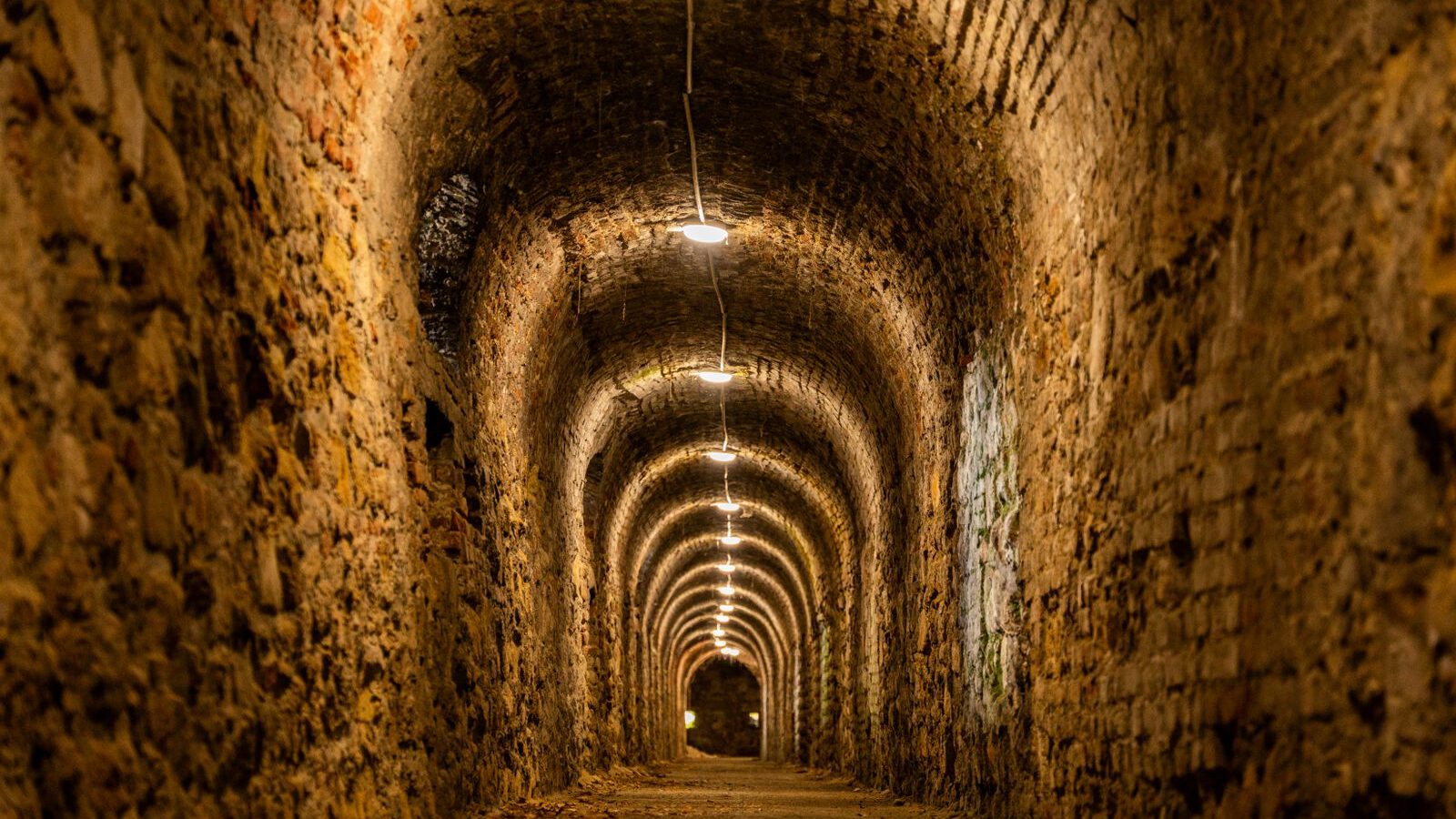
San Clemente is a church built on a church built on a Roman street — a vertical slice through 2,000 years of Rome. At street level you get a glowing 12th-century basilica with a dazzling golden apse mosaic. Go down a staircase and you’re in a 4th-century early-Christian basilica with faded frescoes. Go down again and you reach a 1st- and 2nd-century Roman lane: a chilly, echoing warren that includes a Mithraeum — a temple to the Persian god Mithras — with an underground spring you can still hear running. It’s history you literally descend into.
Is it worth visiting?
It’s one of the best-value historical experiences in Rome. The upper church is free and stunning on its own; the paid excavations are where it becomes unforgettable, because you feel the city physically stacking up beneath your feet. Instead of queuing hours for the Colosseum to imagine ancient Rome, here you walk through an actual Roman street with pagan temple, spring and all — cool, quiet and vivid. For history nerds it’s the single most efficient “how Rome grew” lesson in the city.
How do you get there?
It’s on Via Labicana, a short walk east of the Colosseum. The nearest Metro is Colosseo (Line B), roughly a 5–7 minute walk; Metro Line C’s San Giovanni interchange and several trams (including the 3) and buses also stop nearby. Because it’s so close to the Colosseum, it’s an easy, crowd-free counterpoint on the same trip.
When to go, and what it costs
The upper basilica is free; the underground excavations cost around €10 (reduced roughly €5), typically with timed online booking recommended, and each visit runs about 30 minutes — arrive around 10 minutes early. It’s usually open daily with a midday break (broadly morning and mid-afternoon sessions), so check current hours and book the archaeology online before you go. Note that scaffolding may be present in the upper church during ongoing restoration — verify the current situation when booking.
Insider tip
The lowest level is noticeably cooler and damp — a blessing in summer, but bring a light layer in winter. Stop and just listen at the bottom: the sound of running water is an ancient underground spring/drain still feeding through the Mithraeum, one of those moments that gives the whole descent a spine-tingle. Photography rules can be strict in the lower levels, so check the signs rather than assume.