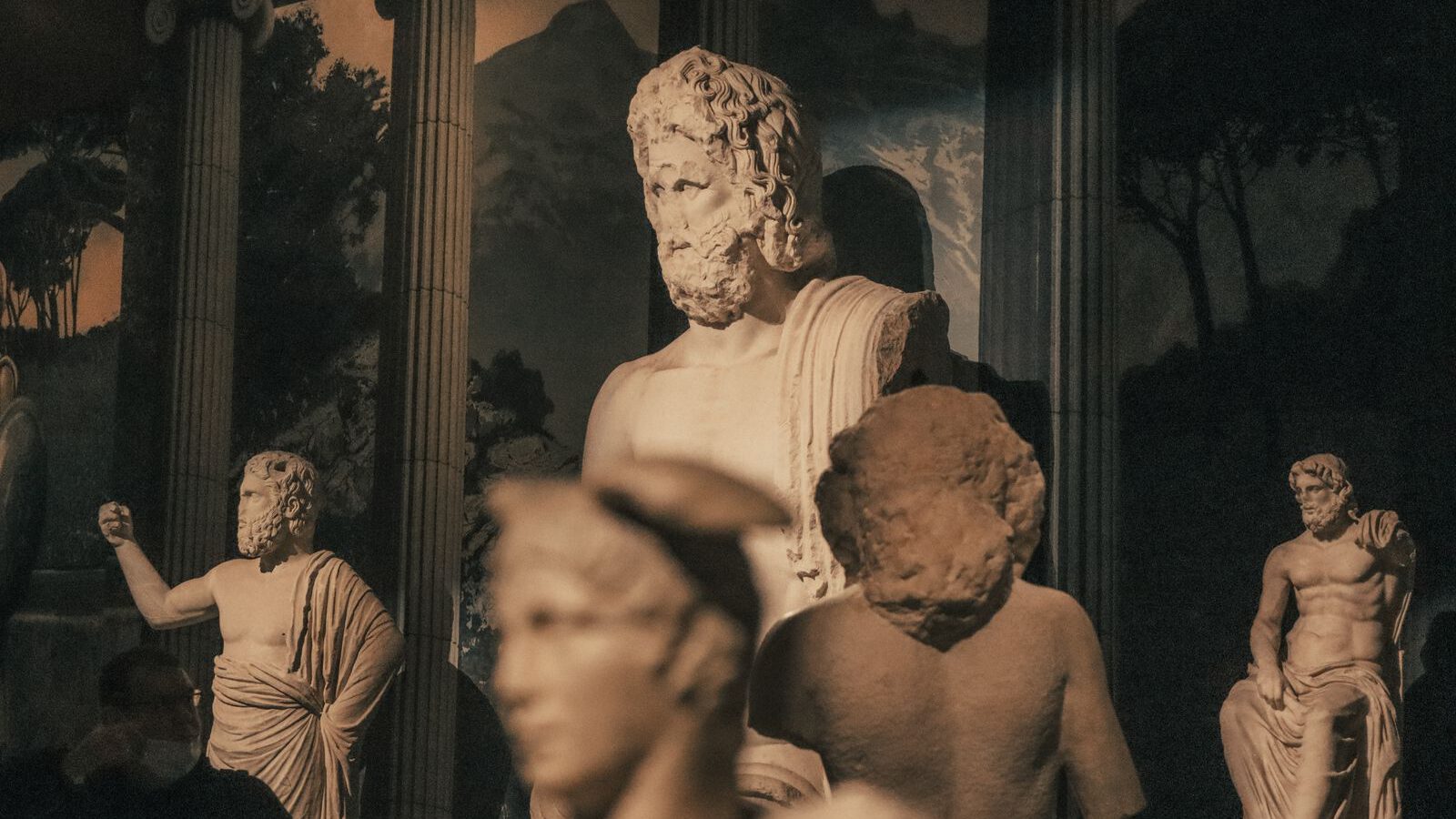
Picture a marble goddess, two thousand years old, lit like the star of a gallery — standing in front of a black diesel engine the size of a bus. That single, deliberate clash is the whole reason to come to Centrale Montemartini, and it works far better than it has any right to.
What is it, exactly?
Centrale Montemartini was Rome’s first public electricity plant, opened in 1912 to light the growing city. When it was decommissioned, the municipality faced a problem — the overflowing Capitoline Museums needed somewhere to show hundreds of classical sculptures — and someone had the inspired idea to leave the machinery exactly where it stood and move the marbles in around it. The result is now a permanent annexe of the Capitoline Museums: rooms of Roman statues, portrait busts, mosaics and reliefs displayed against the boilers, turbines and two colossal diesel engines of the old power station. It was meant to be temporary. It was too good to undo.
Why it beats the Vatican crush
If your idea of appreciating ancient art does not involve being carried along shoulder-to-shoulder in a human river, this is your museum. Much of the sculpture here is genuinely first-rate — pieces from the Capitoline collections, temple pediments, an enormous mosaic floor — and yet the halls are usually near-empty. You can actually stand back, walk around a statue, and let the industrial backdrop make even a familiar figure feel newly strange. Instead of shuffling past the Vatican’s marbles in a forced current with a guide’s umbrella overhead, you get room to breathe and time to look. Romans and design lovers keep it as a semi-secret; tour buses don’t come.
Don’t skip these:
- The Sala Macchine (Machine Room) — the show-stopper, where two vast engines dwarf the statues into something theatrical.
- The Sala Caldaie (Boiler Room) — home to the giant mosaic and hunting-scene floors and some of the finest sculpture.
- The pediment sculptures reconstructed high on the walls — look up, not just ahead.
Getting there
It sits at Via Ostiense 106, in the Ostiense district south of the centre. Easiest is Metro Line B to Garbatella, roughly a 5–10 minute walk; the Piramide stop and Roma Ostiense station are also within reach, and buses run the length of Via Ostiense. It’s on the same side of town as Testaccio market and the Non-Catholic Cemetery, so it’s easy to build a relaxed half-day out of all three.
When to go, and what it costs
Standard admission is around €11, reduced about €6.50, and it’s open Tuesday to Sunday, roughly 9am–7pm, closed Mondays, with last entry an hour before closing. Two things worth knowing for 2026: from February 2026 the museum is free for residents of Rome and the Metropolitan City on showing ID, and temporary exhibitions can raise the combined ticket (one recent show pushed it to around €14.50). Hours shift on public holidays (shorter on 24 and 31 December, later opening on 1 January), so check the official Musei Capitolini / Centrale Montemartini site before you go. It’s rarely busy, but weekday mornings are the quietest. Tickets are sold on the door or online for a small pre-sale fee.
A practical note on combining it with the rest of the city: the same €11-ish ticket doesn’t cover the main Capitoline Museums on the Campidoglio, so if you want both, look at whether a combined or city museum pass suits your trip before you buy singles. Facilities here are modest but fine — a small bookshop, toilets, step-free access to the main halls — and you won’t need to queue for a locker or a timed slot the way you would at the big-ticket sites.
Insider tip
Resist the urge to beeline for the statues. The building rewards a slow first lap where you read it as a power station — follow the pipes, the dials and the engine housings — then a second lap where the marble takes over. It’s also the perfect wet-weather move: on a rainy afternoon when every queue in the centre is a soggy misery, this calm, covered, near-empty hall is one of the best places in Rome to be. Give yourself a good 60–90 minutes; it’s smaller than the Capitoline but you’ll linger longer than you expect.