Three markets stacked in one iron hall
Mercat de Sant Antoni is a colossal 1882 wrought-iron market hall on the seam between the Eixample and El Raval, and it reopened in May 2018 after a nine-year, roughly €80 million restoration. The reason it took nine years is the good part: when the diggers went below floor level they hit history. They found the Sant Antoni bastion — a chunk of the 18th-century wall that once divided the cramped old city from the new Eixample — plus a stretch of the Roman Via Augusta and a first-century burial site. Rather than pour concrete over it, the city preserved the lot and made it visitable in a below-ground archaeological space. So what you actually get is three markets in one building: a working food hall upstairs, a layer of Roman and medieval Barcelona underneath, and — on Sundays — one of the largest second-hand book markets in Europe wrapped around the outside.
Don’t skip the basement
Most visitors walk in, buy an olive, and leave without ever knowing what is under their feet. The archaeological level is included and it is quiet — you can stand over the Roman road and the bastion foundations with barely anyone else around, and it turns a quick market stop into a proper layer-by-layer look at how the city grew outward from its walls. It is the single most overlooked free thing in this part of Barcelona.
The Sunday book market, and how to work it
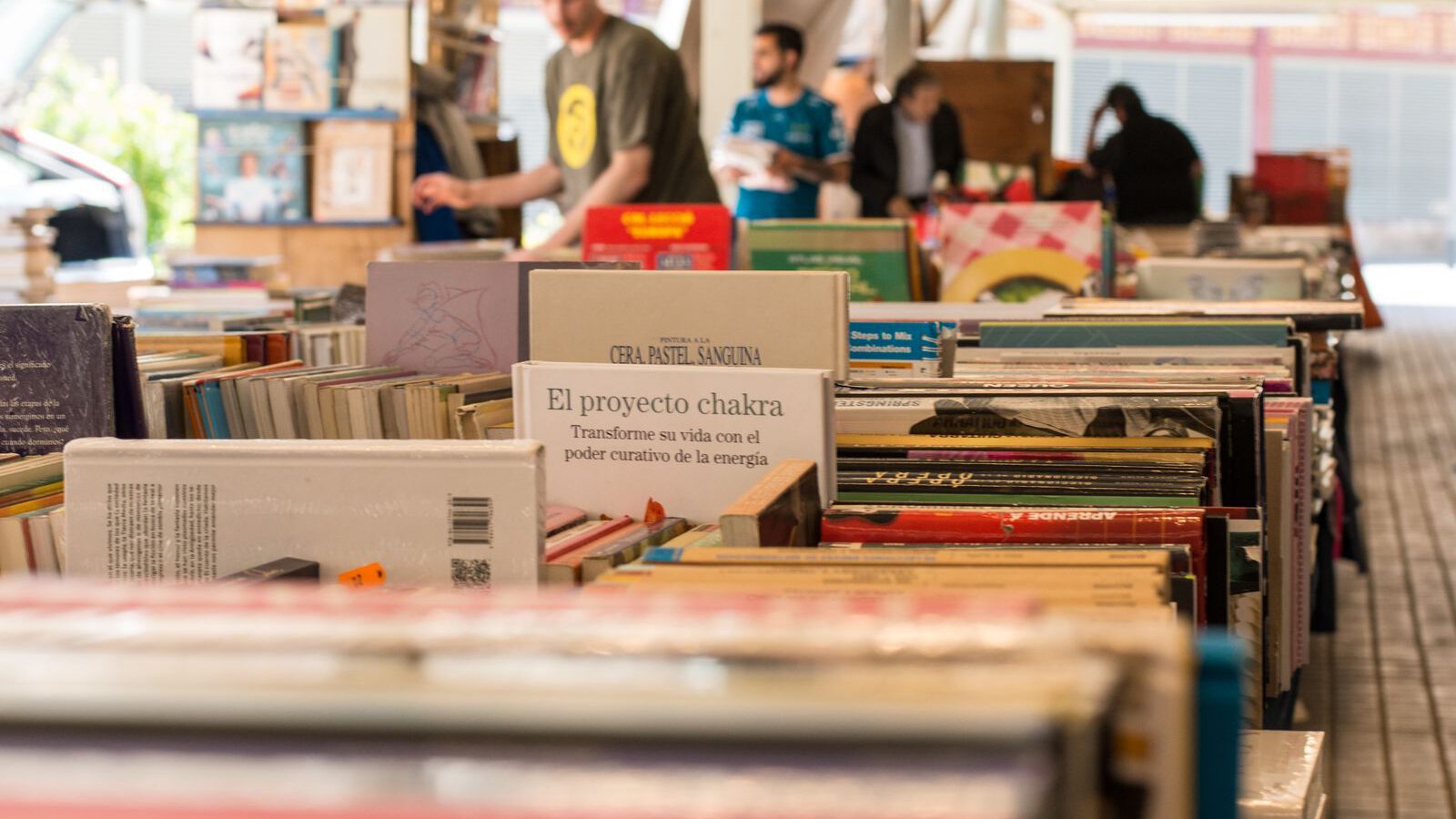
Every Sunday morning, roughly 08:30 to 14:00, the arcades around the market fill with the Mercat Dominical de Sant Antoni: more than forty stalls of second-hand books, comics, magazines, posters, vinyl and collector’s oddities, and it is billed as the biggest market of its kind in Europe. The move is simple — arrive early. By late morning the aisles are shoulder-to-shoulder and the good crates have been picked over. You will find everything from battered literary classics to obscure old Catalan comics for a euro or two, and half the fun is the dig. Bring cash: plenty of the traders don’t take cards for a €2 paperback.
Sant Antoni or La Boqueria?
La Boqueria, off La Rambla, is spectacular and completely overrun — a place most locals now avoid, where too many stalls have quietly turned into photogenic fruit-cup counters for the crowd. Sant Antoni is the working market La Boqueria used to be, in a building that is arguably finer, with prices set for the people who live around it rather than the people photographing it. It is not really a hidden secret; it is a neighbourhood institution that visitors simply never think to cross town for. That is exactly why it is worth crossing town for.
Getting there, hours and what it costs
This is the easiest gem on the whole list to reach. Sant Antoni station on the purple L2 sits right at the market — a one-minute walk. Universitat (L1 and L2) and Poble Sec (L3) are each under ten minutes on foot. Entry to the food hall and the archaeological area is free; you only pay for what you eat or carry out. The food hall runs Monday to Saturday, roughly 08:00 to 20:00, though — as in any Spanish market — plenty of the fish and some other stalls are shut on Mondays because nobody fished on Sunday. For food, come on a weekday morning when everything is stocked and the neighbourhood is shopping; for books, Sunday morning is your only shot.
Where to actually eat
Eat around the edges, not inside. The streets immediately surrounding the market — this is the heart of the “Sant Antoni” district that gave its name to a whole wave of good, unfussy bars and brunch spots over the last decade — are where locals sit down. The correct way to close out a market run is a vermút, house vermouth on tap, at a corner bar mid-morning, ideally with a small plate of olives or anchovies alongside. Order it “amb sifó” if you want it cut with a splash of soda, the local way.
Insider tip
If you can only make one trip and want the full three-in-one experience — food hall, basement archaeology and book market all open at once — Sunday morning is the answer, since the Dominical only runs then and the archaeological space and arcades are lively. If it is the fresh food you’re after, though, skip Sunday and Monday entirely and go Tuesday to Saturday, when the stalls are at their best.