What is it, exactly?
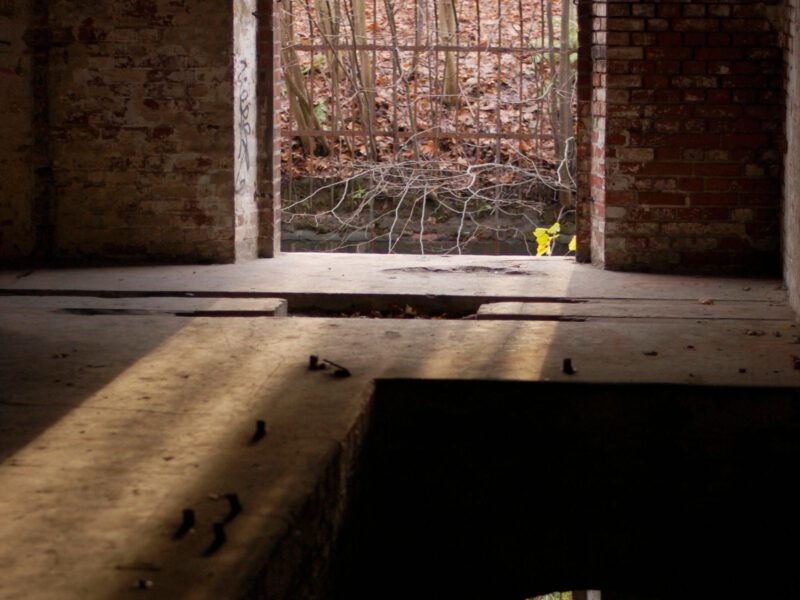
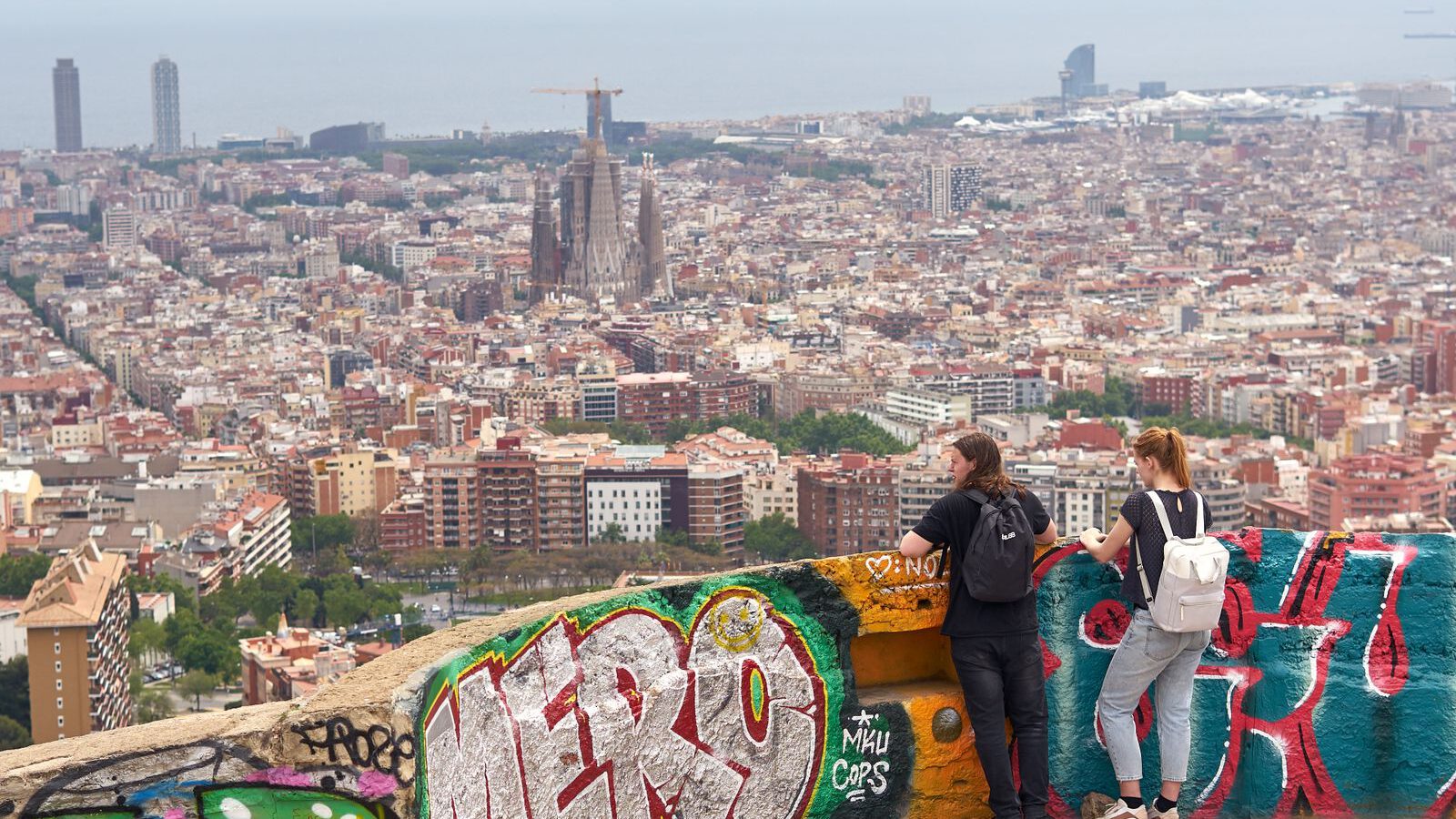
Officially it is the Turó de la Rovira, a 262-metre hill in the Guinardó–El Carmel district, and the “bunkers” are not bunkers at all. They are the concrete platforms of an anti-aircraft battery installed in 1937–38 during the Spanish Civil War to defend Barcelona against Italian bombing raids. After the war the guns went and the hilltop filled with self-built shacks — a shantytown called Els Canons that housed hundreds of families right up until the 1990s. The city cleared it, and the MUHBA (the Barcelona History Museum) restored the site as an open-air interpretation point in 2011. What you get today is the concrete gun emplacements, a few interpretation panels, and an unbroken 360-degree view: the Sagrada Família, the whole grid of the Eixample, the sea, Montjuïc, Tibidabo and the Collserola ridge all at once.
Is it worth visiting? — and why not just Park Güell?
Park Güell is beautiful and its viewpoint terrace is now a timed, ticketed, permanently busy affair. The Bunkers give you a higher, wider and completely free panorama, and unlike Park Güell you can see the whole city rather than one framed slice of it. It is genuinely the best all-round view in Barcelona, and it costs nothing. The honest trade-offs: there is a real uphill walk to reach it whichever way you come, there is no shade and no café at the top, and the site has become popular enough that it is no longer a secret — expect company, especially near sunset. It is still worth it, because a 360-degree view over a city this dense is a rare thing, and here it is open to anyone who climbs the hill.
How do you get there?
There is no station at the top; every route ends with a climb. The nearest metro stops are El Carmel and Guinardó–Hospital de Sant Pau, both on the yellow L4, and Alfons X on L4, each about a 15–20 minute uphill walk. The gentlest option is the bus: lines such as the V17, 22 and 119 climb much closer to the summit, leaving a short final stretch up Carrer de Marià Labèrnia on foot. If you would rather not walk at all, the 119 is the one to look for, as it runs up into the neighbourhood itself.
When to go, and what it costs
Entry is free. Since 2023 the city has gated the site and closed it at night to stop the sunset parties that were disturbing local residents; recent hours run roughly 09:00 to 19:30 in summer and 09:00 to 17:30 in winter, so check the current closing time before you plan a late-afternoon climb. Come in the last hour before the gate closes for the light, or on a clear winter morning when the air is sharp and you will have the platforms nearly to yourself. Bring water, sun cover and something to sit on, because there is nothing at all up there. And please keep the noise down — people live right below the hill.
Insider tip
Read the site, don’t just photograph it. The MUHBA panels tell you which concrete slab held which gun and where the shantytown streets ran, and once you know that, the hilltop stops being a backdrop and becomes one of the most legible pieces of 20th-century Barcelona history anywhere in the city. Then walk down rather than bussing — dropping through El Carmel and Gràcia on foot is a proper look at neighbourhoods most visitors never set foot in, and it delivers you somewhere you can actually get a drink.