What is it, exactly?
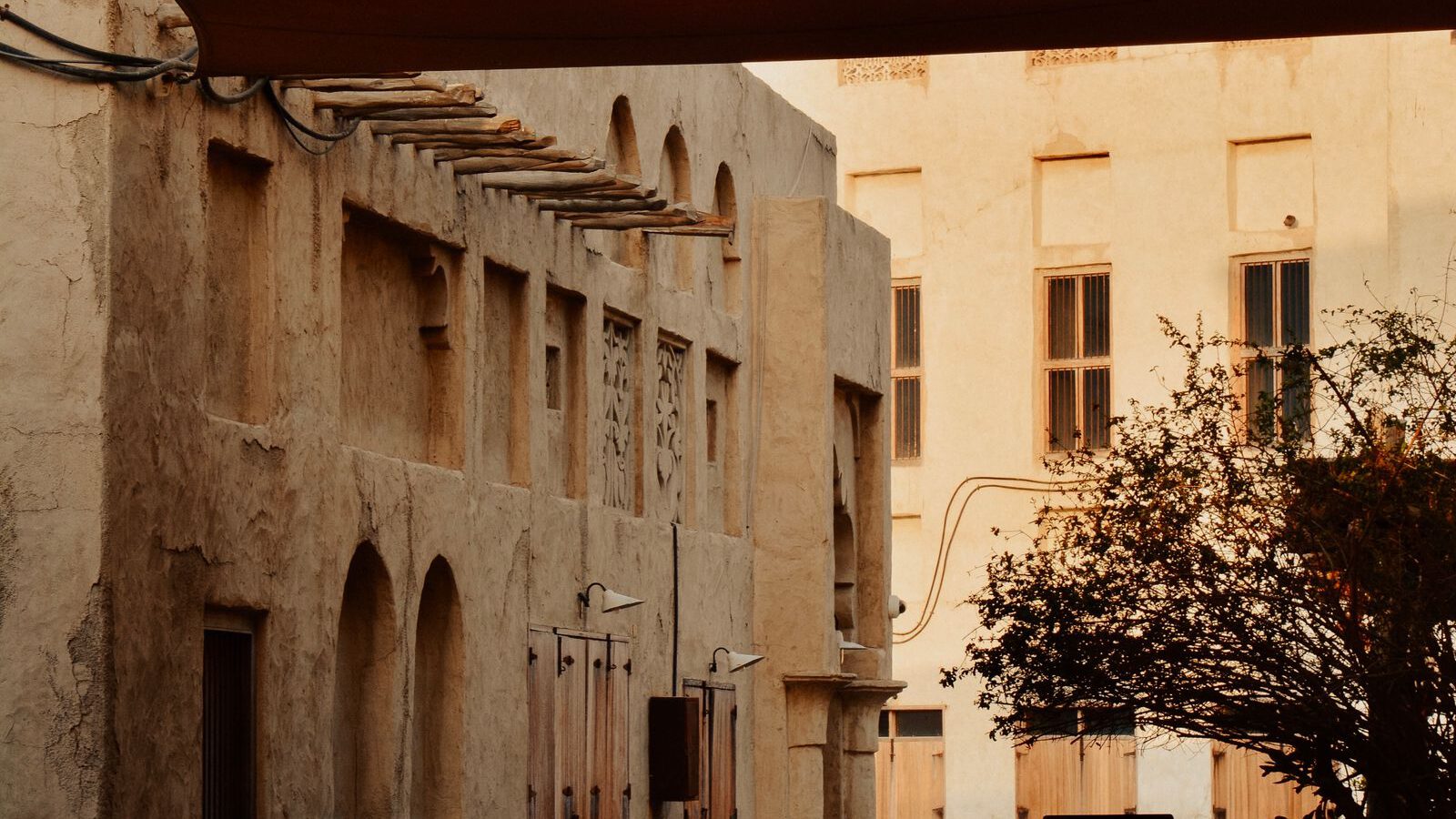
The Al Fahidi Historical Neighbourhood — still widely called Al Bastakiya — is the best-preserved slice of pre-oil Dubai. It is a compact maze of narrow, shaded lanes lined with restored coral-and-gypsum merchant houses, most of them topped by barjeel wind towers: the original, electricity-free air conditioning that funnelled any passing breeze down into the rooms below. Persian textile and pearl traders from the town of Bastak built the quarter in the late 1800s, on the Bur Dubai bank of Dubai Creek. Today the houses hold small museums, cafes, craft shops and art spaces, but the real draw is just walking the lanes.
Is it worth visiting?
Yes — and it is the obvious antidote to the malls. Instead of queuing for the Burj Khalifa observation deck, spend an hour here and pair it with the creek: from Bur Dubai Abra Station, right by the quarter, a traditional wooden abra ferries you across to the Deira souks for 1 AED. That short, wobbly crossing past dhows and gulls is one of the most memorable things you can do in Dubai, and it costs less than a fifth of a dirham per minute. Al Fahidi is quiet, walkable and free, and it tells you where the city actually came from — something a 124th-floor viewing gallery never will.
How do you get there?
Take the Metro Green Line to Al Fahidi station and walk about 10 minutes toward the creek, or to Al Ghubaiba station on the same side. Buses stop at Al Ghubaiba bus station nearby. For the abra crossing, walk to Bur Dubai Abra Station on the waterfront at the edge of the quarter; the boats leave for the Deira Old Souk side whenever they fill up.
When to go, and what it costs
Entry to the neighbourhood is free and the lanes are open all day, every day. Come between November and March, and ideally early morning or late afternoon — at midday in summer the walls radiate heat and the alleys empty out. The abra costs 1 AED per person, cash only, paid to the boatman once the boat pushes off; the commuter route between Bur Dubai and Deira Old Souk typically runs from early morning until around midnight. Individual house-museums may charge a few dirhams; check current opening days, as many close on Fridays or for prayer times.
Insider tip
Book onto a meal or coffee morning at the Sheikh Mohammed Centre for Cultural Understanding, based in the quarter — their “open doors, open minds” sessions let you ask genuinely blunt questions about local life, religion and customs over Emirati food. And do the abra both ways: crossing to Deira, wandering the spice and gold souk lanes, then floating back at dusk is the whole point.