
What is it, exactly?
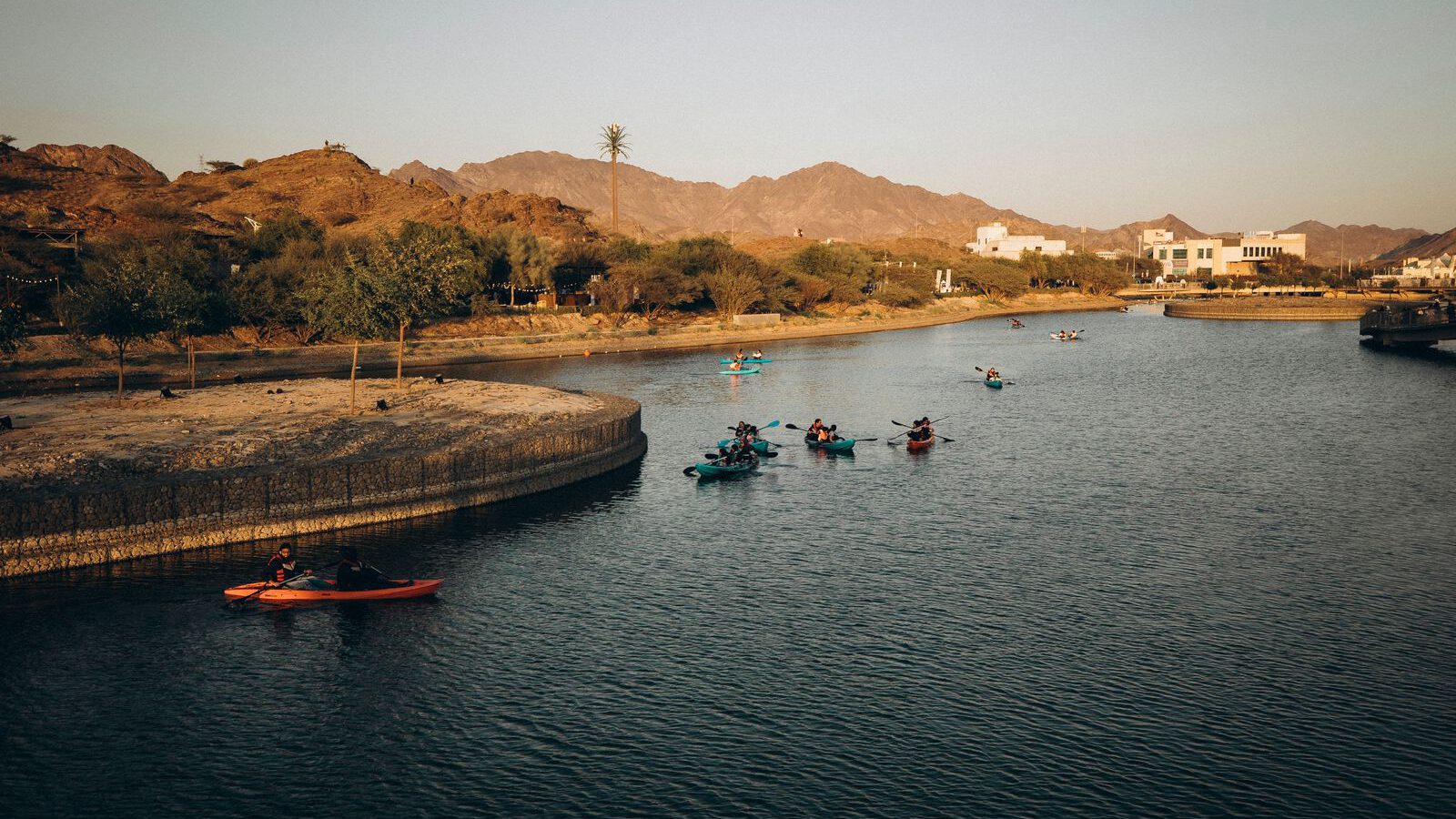
Hatta is a slice of Dubai that most visitors never realise exists: a mountain exclave tucked into the rugged Hajar range near the Oman border, about a two-hour drive from the towers. Its showpiece is the Hatta Dam, a reservoir of startlingly turquoise water sunk between bare ochre peaks, where you can rent a kayak or pedal boat and paddle straight out under the cliffs. A short way up the road, the Hatta Wadi Hub stacks up mountain biking, hiking trails, a zipline, a ropes course and donut boats, while the restored Hatta Heritage Village tells the older story of the mud-brick village, its watchtowers and falaj irrigation channels.
Is it worth the drive?
As a full-day escape, absolutely — this is the anti-Dubai. No malls, no skyline, no valet; just mountains, quiet water and clean air. Kayaking the dam is the standout: gliding across glassy turquoise with the paddle-drip echoing off the rock is a world away from a dune-bash safari or another rooftop pool, and it’s the single best argument that “Dubai” means more than a skyline. If you only do one thing here, do that.
Round it out with the rest. The Hatta Heritage Village is a restored mountain settlement of mud-brick and stone houses, two defensive watchtowers on the ridge, an old mosque and the falaj channels that once carried spring water through the village — a quiet, free wander that puts the dam in context. The Wadi Hub is the adrenaline end: mountain-bike trails graded like ski runs, hiking routes, a zipline, a wall climb and a ropes course, plus food trucks and clean facilities. Fair warning, honestly given: Hatta has been heavily developed for weekend tourism, so on a cool-season Friday or Saturday it can feel busy and managed rather than wild. Midweek, or first thing, it’s far closer to the mountain escape the brochures promise.
How do you get there?
Hatta is about 130 km from central Dubai via the E44, and realistically you need a car or an organised tour — there’s no useful public-transport link. Use the fully domestic route (older roads once clipped through Omani territory) and carry your ID just in case. There’s free parking near the dam. If you’d rather not drive, day tours from Dubai bundle the transport with the dam, the Wadi Hub and the Heritage Village, which takes the navigation and the long return drive off your plate.
When to go, and what it costs
Go in the cooler months, roughly November to March (October and April are borderline); summer in the mountains is fierce. Reaching Hatta and looking at the dam costs nothing. Kayak rental is paid on the spot at the waterside on a first-come basis — reckon on around 60 AED for a single kayak (operators quote a 50–100 AED range depending on the vessel and time), life jacket included, with pedal and donut boats a little more. No booking needed for the kayaks; Wadi Hub activities and guided day tours are priced separately. Start early to beat both the heat and the weekend queues.
The insider move
Get to the dam as close to opening as you can manage. Early, the water is mirror-calm, the light is soft on the peaks, and you might have the reservoir nearly to yourself; by late morning on a cool-season weekend the kayak queue builds fast and the surface chops up with traffic. Bring cash for the rentals, plenty of water and sun cover, and wear shoes you don’t mind soaking at the slipway. If you’ve got time after paddling, drive up to the Hatta Dam viewpoint for the postcard shot down onto that impossible turquoise.