The railway Paris left to the foxes
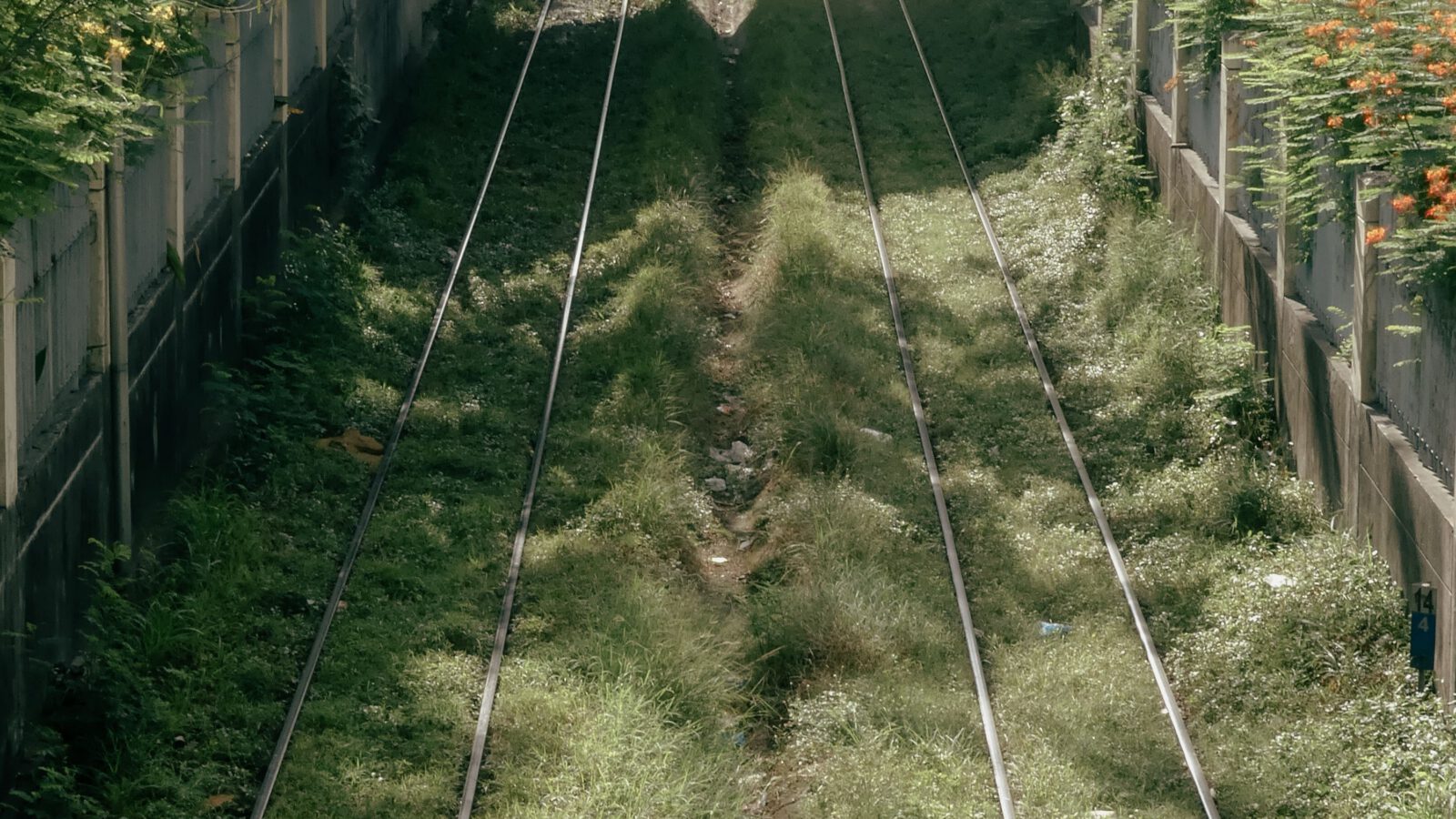
The Petite Ceinture (“Little Belt”) was a steam-era railway that looped right around Paris just inside the old city walls, opened in the 1850s–60s to move people and freight between the mainline stations. Passenger services stopped in 1934, freight dwindled for decades, and then the tracks were simply abandoned — left to seed themselves with wildflowers, brambles and birds. In the 15th arrondissement, the city has turned a stretch of this ghost line into a deliberately half-wild linear park: you walk beside the original rusting rails through a green cutting of buddleia, birch and ivy, past old railway bridges and a former station building, with apartment blocks rising on either side.
Newly extended: a tunnel and 655 more metres
Worth knowing before you go: in July 2025 the city opened a new southern section, adding roughly 655 metres of path — including about 300 metres through a lit railway tunnel — extending the walk toward the 14th-arrondissement boundary near rue de Brancion. Combined with the original stretch (about 1.3 km from rue Olivier de Serres toward place Balard), that makes for a longer, more varied walk than the guidebooks describe, and the tunnel section is a genuinely unusual, slightly eerie thing to do in the middle of a big city.
Walking it: what to expect (and what not to)
The path is flat, gravelled and easy — trainers are fine, no hiking required. Expect birdsong, graffiti on the old retaining walls, information boards about the line’s wildlife, and benches to sit on. It’s a favourite of dog-walkers, photographers and parents with buggies. What it is not: dramatic. There are no monuments and no big views. The appeal is the quiet, the greenery and the odd romance of walking a railway no train has used in a lifetime. Set your expectations to “atmospheric urban nature,” not “spectacular,” and you’ll love it.
Keep an eye out for the wildlife, because the whole point of leaving the line semi-wild is what has moved in: the cutting is a genuine biodiversity corridor, home to birds, insects, wildflowers, and — famously across the wider Petite Ceinture — hedgehogs, bats and even the odd fox. In spring the buddleia and brambles hum with bees and butterflies. There are interpretation boards along the way explaining the ecology and the railway’s history, so it doubles as a low-key nature walk you can do in city shoes.
Is it worth the detour? Honestly, depends on you
Worth it if you’re into urban exploration, wild-in-the-city greenery, photography or just want a genuinely local pocket of Paris with zero tourists. Skip it if you have one day in the city and a long must-see list — this is a “second or third visit,” slow-travel kind of stop. As a break between big sights, though, it’s Paris with the volume turned right down, and it costs nothing.
Access points, metro and gate hours
The handiest access is opposite about 106 rue Olivier de Serres in the 15th. Nearest metro: Convention (line 12) for that end, or Balard (line 8) for the western end near place Balard; buses 42, 80 and 88 also serve the area. Crucially, this is a gated park with fixed hours — typically opening around 9:00 on weekdays and 9:30 at weekends, and closing anywhere from late afternoon in winter to the evening in summer. Check the current times (the Ville de Paris “Petite Ceinture du 15e” page lists them) so you don’t arrive at a locked gate.
Pair it with Parc Georges Brassens
Right beside the western end is Parc Georges Brassens — a lovely, under-visited park with a small working vineyard, beehives, a pond and, on weekends, a much-loved second-hand and antiquarian book market in the old horse-market pavilions. Do the railway walk, then the park, and you’ve filled a relaxed morning. Go early for the softest light and near-empty paths.
One warning: don’t wander the closed sections
Only certain stretches of the Petite Ceinture have been made safe and opened as parks. The rest is fenced off, often with live-ish infrastructure, unstable ground and tunnels — entering it is both illegal and genuinely dangerous. Stick to the official 15e section and the other sanctioned walks (there’s one in the 16e and around Parc de la Villette).