If what you love about Montmartre is the idea of it (a village on a hill, crooked lanes, artists, cheap wine) but not the crowds on the steps of Sacré-Cœur, come to the Butte-aux-Cailles in the 13th instead. It is small enough to cover on foot in an hour, there is nothing to buy a ticket for, and on a weekday morning you can have whole streets to yourself. Come back after dark and the same lanes turn into one of the most affordable nights out in Paris.
Why this hill never got the Haussmann treatment
The Butte-aux-Cailles sits above old limestone quarries and close to the buried course of the Bièvre, the river that once fed the tanners and dyers of this part of Paris. Ground riddled with galleries was no place for heavy six-storey apartment blocks, so the hill kept its low houses, irregular streets and a scale that feels closer to a market town than a capital.
It has a couple of good stories, too. The first free flight in a hot-air balloon, flown by Pilâtre de Rozier and the Marquis d’Arlandes in November 1783, came down here, in what was then open country outside the city. And in May 1871, during the Bloody Week that crushed the Paris Commune, the Butte was one of the last neighbourhoods to hold out. The little Place de la Commune-de-Paris and the restaurant Le Temps des Cerises, named after the song forever linked with the Commune, still nod to it.
Following the street art without a map
There is no official trail, and that is the point: pieces fade, get painted over or appear overnight. Start at Place de la Commune-de-Paris and work outwards along rue de la Butte-aux-Cailles, rue des Cinq-Diamants, rue Buot, rue Gérard and passage Boiton, looking up at gable ends and down at doorsteps as much as straight ahead. Names to watch for:
- Miss.Tic: her stencilled dark-haired women with one-line, punning captions became a signature of these streets from the mid-1980s. She died in 2022, and a handful of her stencils still survive on the Butte.
- Jérôme Mesnager: look for his loose-limbed white silhouettes running across façades.
- Jef Aérosol: black-and-white stencilled figures, often with his trademark red arrow.
- Everyone else: paste-ups, mosaics and small stencils by newer names, which turn over constantly.
For the opposite scale, walk about 15 minutes east to Boulevard Vincent-Auriol and the streets around it, where the 13th has had entire apartment-block façades painted as giant murals.
The cottages most visitors walk straight past
Some of the best things here are architecture rather than paint. At 10 rue Daviel, La Petite Alsace is a 1912 estate of around 40 half-timbered houses set round a garden courtyard, built as affordable homes for working families. It is private, so look through the gate rather than wander in. Across the street, Villa Daviel is a short cobbled lane of small houses with front gardens.
Ten minutes’ walk south-west, the Cité florale is a little triangle of lanes named after flowers (rue des Orchidées, rue des Iris, rue des Volubilis) lined with pastel cottages and climbing plants. People live here, so keep your voice down and your photos discreet.
Spring water from 600 metres down, and a pool closed until 2027
On Place Paul-Verlaine, the heart of the hill, a public fountain delivers water from the Albian aquifer, more than 600 metres below Paris. Drilling started in the 1860s and only reached the water in 1904; it rises at around 28°C. Eau de Paris runs it as one of just three spring-water fountains in the city. It is free and drinkable, with a slightly mineral, iron-tinged taste, and locals fill bottles here, so bring an empty one.
The same well has fed the red-brick Piscine de la Butte-aux-Cailles on the square since 1924. Designed by Louis Bonnier and now a listed monument, it has a 33-metre indoor pool and an outdoor Nordic pool kept at 28°C all year, and a normal swim costs €3.50. The catch: the city has closed the whole pool for major works from 7 September 2026 to 31 March 2027. Until then, enjoy the façade and check paris.fr for the reopening date before you pack a swimsuit.
Where to eat and drink on the Butte
This is a dinner-and-drinks neighbourhood more than a café one. Le Temps des Cerises at 18–20 rue de la Butte-aux-Cailles has been run as a workers’ cooperative since 1976 and serves straightforward French bistro food; it is usually closed on Sundays. Chez Gladines, at 30 rue des Cinq-Diamants, is the local institution for enormous, cheap Basque-style salads and plates. It does not take reservations, so arrive early or expect to queue.
For drinks, the bars along rue de la Butte-aux-Cailles, such as Le Merle Moqueur and La Folie en Tête, fill up from early evening, with the crowd spilling onto the pavement on warm nights. If you would rather picnic, the street market on Boulevard Auguste-Blanqui at the foot of the hill runs on Tuesday, Friday and Sunday mornings.
Getting there and timing your visit
The closest station is Corvisart on line 6, where the trains run on an elevated viaduct; from there it is a five-minute walk uphill. Place d’Italie (lines 5, 6 and 7) is the other easy option: follow Boulevard Auguste-Blanqui west for a few minutes and turn up rue des Cinq-Diamants. Tolbiac on line 7 works if you are coming from the south.
- For street art and photos: a weekday morning, when the cobbles are empty and the light is soft.
- For atmosphere: late afternoon into the evening, especially towards the end of the week.
- How long: an hour covers the core lanes; give it two or three with the Petite Alsace, the Cité florale and a meal.
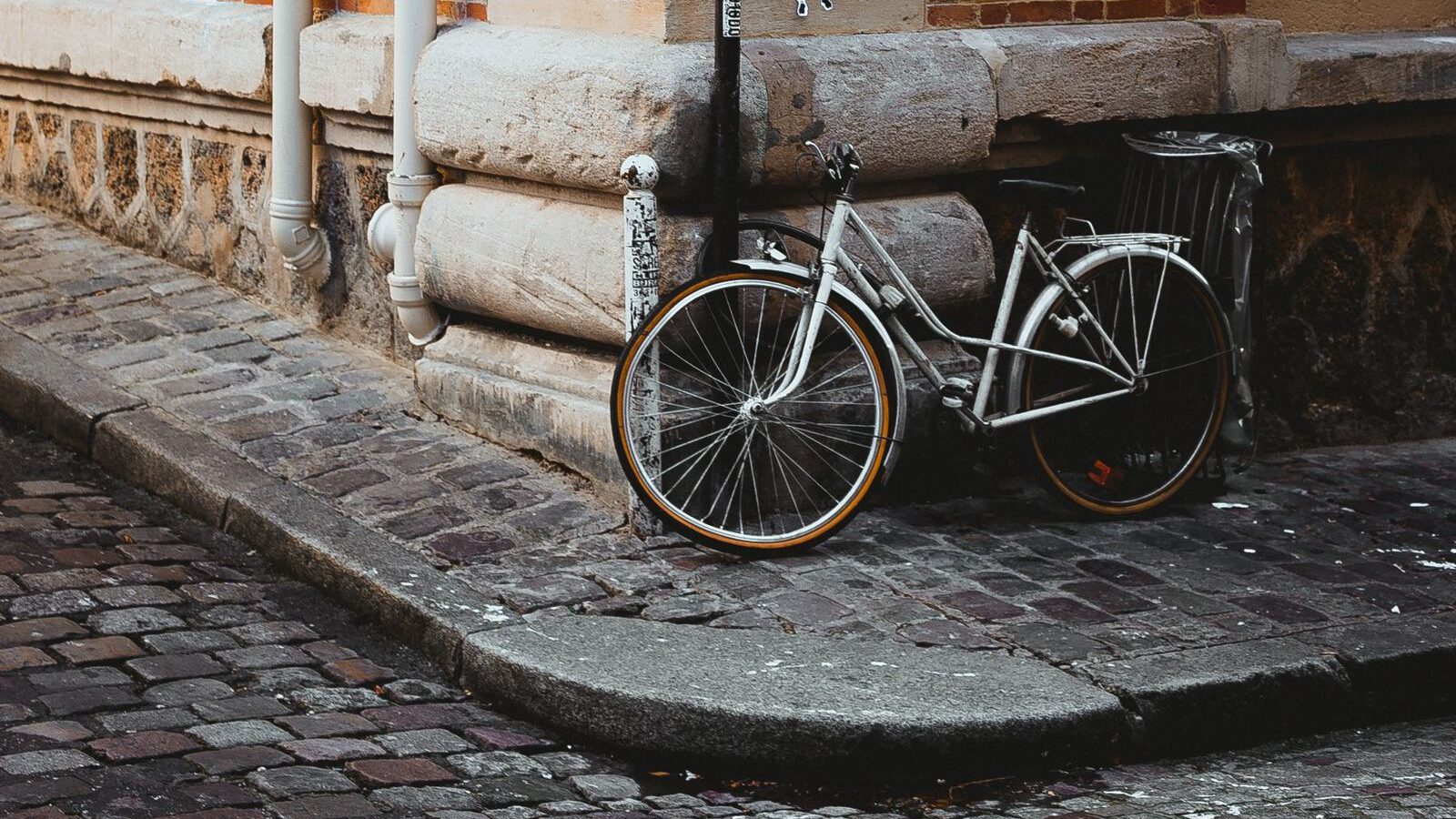
- Shoes: some lanes are steep and cobbled, which also makes parts of the hill hard going with a buggy or wheelchair.
The Butte pairs neatly with mint tea at the Grande Mosquée, just a few stops up line 7 from Place d’Italie. And if the stencils leave you wanting more, the walls of Rue Dénoyez in Belleville are repainted so often that they rarely look the same two weeks running.