An airport the city refused to build on
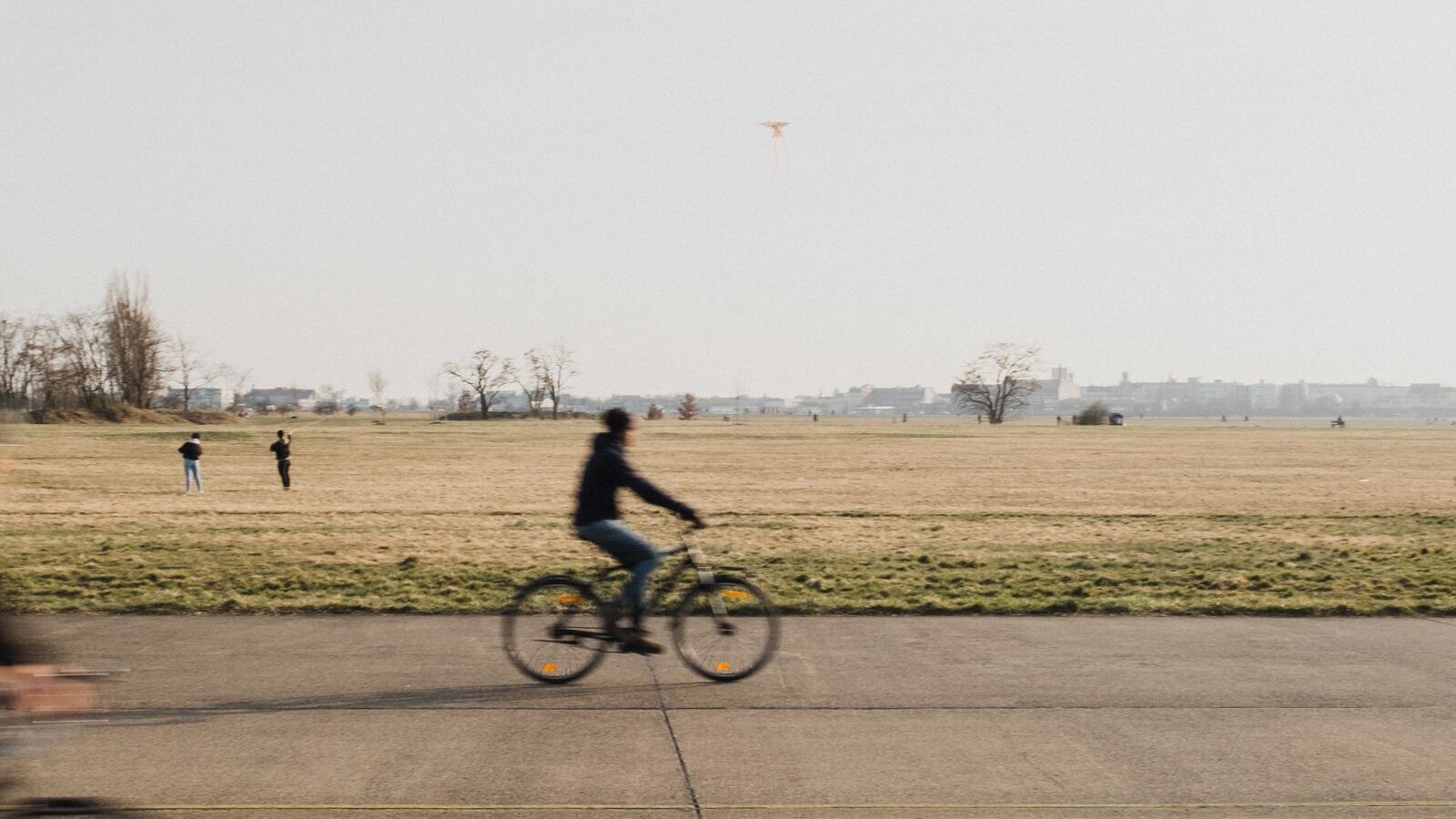
Tempelhofer Feld is the flat, treeless expanse of the old Berlin-Tempelhof airport, which flew its last plane in 2008 and reopened as a public park in 2010. Roughly 300 hectares of former airfield sit almost exactly as the aircraft left it: two parallel runways nearly 2 km long, the taxiways, the painted markings, even the direction signs. In 2014 Berliners voted in a referendum to block any building on it — no housing, no development — so instead of a new district you get one of the largest inner-city open spaces in the world, kept deliberately raw. The hulking curved terminal, once among the biggest buildings on Earth by floor area, still looms along the northern edge.
The dramatic backstory under your feet
This flat expanse is where the Berlin Airlift played out. When the Soviets blockaded West Berlin in 1948–49, Allied planes landed here around the clock — at the peak, one roughly every couple of minutes — flying in food and coal to keep the western half of the city alive. The pilots earned the nickname Rosinenbomber (“raisin bombers”), and one famously began parachuting sweets to children waiting by the fence, the “Candy Bomber.” Knowing that as you stroll the runway changes the whole place: the giant airlift memorial with its three prongs sits just outside the northern gate at Platz der Luftbrücke, one prong for each air corridor into the city.
What people do out here
This is everyday Berlin at play, not Berlin performing for visitors. On a good day the runways fill with:
- Wheels of every kind — road cyclists doing laps, kids on scooters, longboarders, roller-skaters, and the local speciality: kite-buggies and wind-skaters using the flat straightaways as a launch pad.
- The Allmende-Kontor community garden on the eastern side, where 500-plus gardeners tend around 250 raised beds cobbled together from pallets and crates — a lovely, ramshackle pocket to wander (organisers are usually about on summer Saturday afternoons).
- Barbecues and picnics in the marked grilling zones, plus fenced dog runs and protected meadows left wild for ground-nesting skylarks.
The draw is the sheer scale. Standing mid-runway with nothing but sky, painted centreline and a far-off skyline is a genuinely odd, freeing feeling no manicured park delivers.
A better shout than the Tiergarten?
For space and sunsets, yes. The Tiergarten is greener and more central, but it’s also busier and hemmed in by traffic. Tempelhof trades trees for horizon: more air, better light, and the surreal novelty of strolling down a real runway. It’s completely free, and it pairs naturally with the food and bars of surrounding Neukölln.
Which entrance, and how to get there
There are gates on three sides, and the one you pick shapes your visit:
- Tempelhofer Damm (west): U6 to Tempelhof (also S-Bahn) or Paradestraße — closest to the terminal, busiest, most facilities.
- Oderstraße (east): U8 to Leinestraße or Boddinstraße — drops you by the community gardens and the liveliest picnic scene.
- Columbiadamm (north): handy if you’re coming from Kreuzberg.
Hours and cost
Entry is free. Opening tracks daylight and the gates genuinely lock at closing, so time an evening visit: roughly 6:00–22:30 in June and July, tightening to about 7:30–17:00 in December, with the shoulder months in between. Shade and taps are scarce across the open field, so bring water and sun cover, or stock up in Neukölln first — there’s little to buy once you’re out on the tarmac.
Insider moves
Walk or roll to the far southern end of the runways, away from the Tempelhofer Damm crowds — the space empties out and you get the cleanest, widest sunset with the terminal silhouetted behind you. Bring wheels if you possibly can; a flat 2 km runway is wasted on foot. And if the aviation history grabs you, the terminal itself runs separate guided building tours (booked and paid apart from the free field) that take you into the vast departure hall and old bunkers.
Pair it with
Leave by the Oderstraße gate and you’re straight into the Schillerkiez, one of Neukölln’s most characterful pockets: Herrfurthplatz with its church and cafés, plus the bars and bakeries of Weserstraße a short walk on. It’s the ideal way to round off a runway sunset — food and a drink among locals, five minutes from where you watched the sky go down. For a longer day, the Tempelhof terminal tour in the morning and the field at golden hour make a neat, full-circle pairing.