
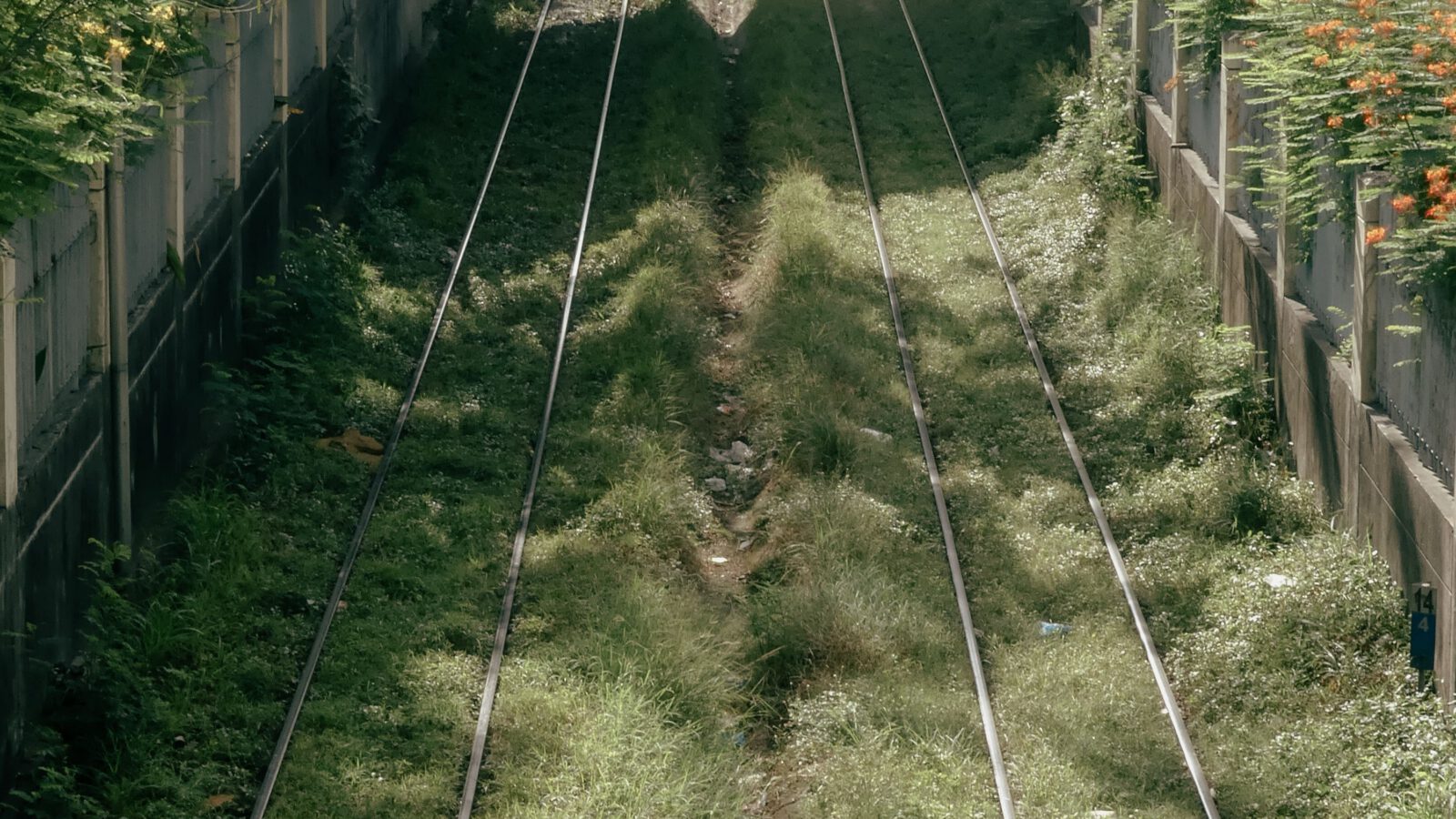
What is it, exactly?
The Petite Ceinture is the 36-kilometre double-track freight railway built under the Second Empire between 1852 and 1869 to loop around Paris inside the boulevards des Maréchaux. It carried passengers until 1934 and goods into the 1980s, then was simply left. Vegetation took the ballast, the embankments and the bridge parapets, and the line became an accidental ecological corridor. The City of Paris has since opened walkable sections in the 12th, 13th, 14th, 15th, 16th, 17th, 19th and 20th arrondissements; the one in the 15th runs roughly 1.3 kilometres between Place Balard and Rue Olivier-de-Serres and has been open since summer 2013. The design brief was deliberately minimal and reversible: rails left in place, ballast left underfoot, embankments fenced off, and no lighting at all.
Is it worth visiting? — and why not just the Coulée verte René-Dumont?
The Coulée verte (the 1993 viaduct walk in the 12th that inspired New York’s High Line) is the famous one, and it is lovely — but it is landscaped, manicured and popular. The Petite Ceinture du 15e is the opposite proposition. This stretch is raised, sunny and open, and you are walking on an actual railway rather than a garden built on top of one. Over 220 plant and animal species have colonised it, including protected birds, and the prairie is mown only once or twice a year to fit nesting seasons. It is short — twenty to thirty minutes at a stroll — so treat it as a link in a chain rather than a destination in itself. It is also, refreshingly, almost entirely local: joggers, dog-free walkers, parents with prams.
How do you get there?
For the western entrance at Place Balard, take metro line 8 to Balard, which is also the terminus of tram T3a — the access point is a two-minute walk. For the eastern end at Rue Olivier-de-Serres, use Convention or Porte de Versailles on line 12, both around eight to ten minutes on foot. A single Metro-Train-RER ticket is €2.55 flat, whichever end you start from.
When to go, and what it costs
Free, no ticket, no booking. It opens during daylight hours and closes at night — there is deliberately no lighting anywhere on the line so as not to disturb nocturnal wildlife, so leave well before dusk. Late spring, roughly May and June, is the best window: the prairie is up, the birds are active and the light on the cutting walls is good. A bright winter morning is the other good bet, when the bare vegetation lets you read the railway structure properly. One firm rule to know before you set out: dogs are banned on the Petite Ceinture, including on a lead.
Insider tip
Chain it. Start at Parc Georges-Brassens, use the linking passage from its Rue de Dantzig entrance onto the line at Rue Olivier-de-Serres, walk west to Balard, then finish in Parc André-Citroën — the same industrial history end to end, since the line once served the Citroën works at one end and the Vaugirard abattoirs at the other. Bring food with you, because there is nothing at all on the line itself. And ignore the forum posts about holes in the fence: unopened sections are still SNCF Réseau railway land governed by the Code des Transports, and the legal section is the more interesting walk anyway.