What is it, exactly?
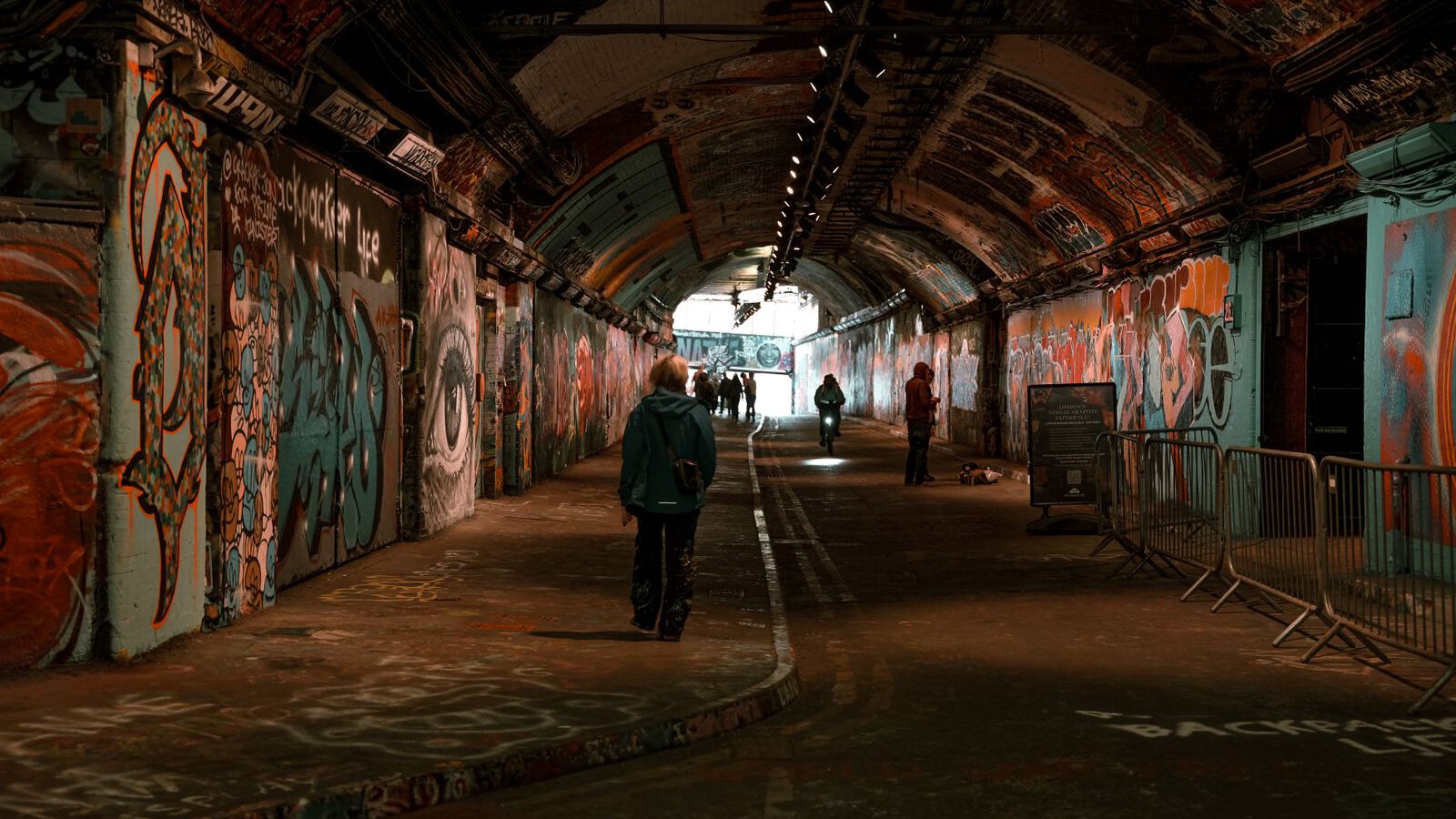
Leake Street is a road tunnel that dives under the platforms of Waterloo station and comes out the other side, and for its full length — roughly 300 metres of wall, ceiling and pillar — spray paint is not just tolerated but expected. Locals call it the Leake Street Tunnel, the Banksy Tunnel or simply the Graffiti Tunnel. It is the closest thing central London has to a permanently open-air gallery that anyone can add to, and unlike almost everything else within a mile of the South Bank, nobody will move you on for lingering, filming or painting.
The tunnel earned its status in May 2008, when Banksy staged the Cans Festival here and invited stencil artists from around the world to take the walls; a second edition followed that August. What was a grimy underpass became, more or less overnight, London’s default legal wall. Since then the side arches have been carved out into bars, restaurants, a small-plates strip and event spaces, but the through-route itself stays raw and free — a working surface rather than a preserved museum piece.
Why it’s worth an hour of your day
The honest pitch is this: because the paint gets refreshed constantly — some pieces survive months, others are gone within hours — Leake Street is one of the very few London “sights” that is genuinely different on every visit. You are not looking at a finished artwork behind glass; you are dropping in on a surface mid-conversation. Come back a fortnight later and half of it has changed.
It’s worth it if you’re into street art, photography, or simply want a fifteen-minute detour that costs nothing and doesn’t feel like everyone else’s London. It’s less worth a dedicated cross-city trip on its own — treat it as the anchor of a South Bank afternoon rather than the whole plan. And if you’re weighing it against a paid “graffiti experience,” the tunnel wins on price (free) and authenticity (real), if not on hand-holding.
Instead of queueing and paying for the London Eye a few hundred metres away, you can spend the same slice of time somewhere that actually tells you something about the city’s creative underside — and keep the money for a pint in one of the arches afterwards.
Getting there (and which exit to use)
The tunnel sits directly beneath Waterloo, so any of the following work:
- Waterloo (Bakerloo, Jubilee, Northern and Waterloo & City lines, plus National Rail) is a two-to-three-minute walk. Head out toward York Road and look for the ramp dropping down beside the station.
- Waterloo East is equally close if you’re arriving on a Southeastern train.
- Lambeth North (Bakerloo line) is about a five-to-seven-minute walk if you’d rather enter from the far end.
Entrances are on York Road, Waterloo Station Approach and Lower Marsh. Walking in from the York Road end drops you straight into the busiest, most-painted stretch; coming from Lower Marsh lets you pair it with that street’s cafés and market stalls on the way.
When to go, and what it costs
Entry is free and the walkway is open 24 hours — it’s a public through-route, not an attraction with a gate. If you specifically want to watch artists at work rather than just see the results, aim for a weekend afternoon, roughly 1pm to 5pm, which is when the wall is busiest with people actually painting. Weekday mornings are quietest and best for unobstructed photos of the current pieces.
Because it’s fully covered, it’s also one of central London’s most reliable wet-weather options — a genuinely useful thing to have in your back pocket when a South Bank plan gets rained off. The arch bars and food traders keep their own hours (mostly afternoons into the evening); the tunnel itself never closes.
Insider tips
- Photograph on the way in, not out. If a piece catches your eye, shoot it immediately — there’s a real chance it’ll be painted over before you leave.
- Walk it twice. Go the full length, then double back. The changing angle and light make different work on the ceiling and pillars jump out that you completely missed the first time.
- Check the arches’ event listings first. Paint jams, spray-can workshops and pop-ups run here regularly, and timing your visit to one turns a quick look into an event.
- Bring your own cans if you want to paint. The etiquette is simple: don’t paint over fresh, high-quality work, and give anyone mid-piece their space.
- Pair it with Lower Marsh, the low-key street market just beyond the far exit, for lunch — it’s where locals eat, not tourists.