
What is it, exactly?
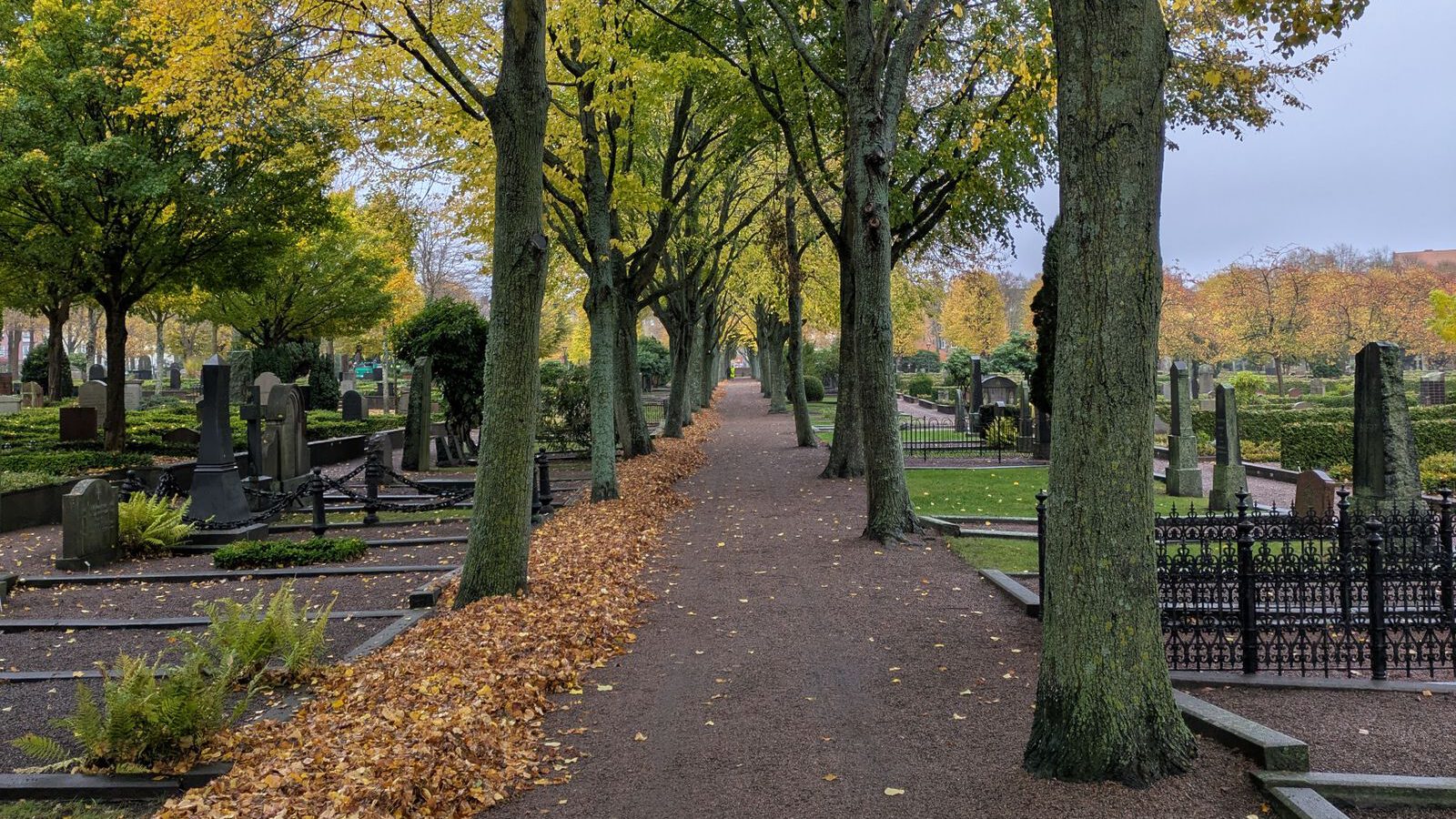
Assistens Cemetery (Assistens Kirkegård) in the Nørrebro district is a working graveyard that Copenhageners treat as their local park. Laid out in 1760 beyond the old city walls, its long, lime-tree avenues, mossy headstones and wildflower meadows now double as a place to jog, picnic, read and sunbathe among the graves. It is also where two giants of Danish culture are buried: the fairy-tale writer Hans Christian Andersen and the philosopher Søren Kierkegaard, along with physicist Niels Bohr and jazz saxophonist Ben Webster.
Is it worth visiting?
Yes — and it is a far calmer, more local experience than fighting for a photo of the Little Mermaid. This is where you see how Danes actually live: kids on scooters, students with coffee, elderly couples on benches, all sharing space with 250 years of history. The atmosphere shifts completely by season — dappled green tunnels in summer, blazing gold in autumn — and finding Andersen’s simple stone or Kierkegaard’s family plot feels like a small treasure hunt rather than a queue. Go quietly and respectfully; funerals still happen here.
How do you get there?
Take the M3 Cityring Metro to Nørrebros Runddel, which sits right at the cemetery’s edge — you are inside in under a minute. Alternatively, buses along Nørrebrogade stop nearby, or cycle: it is about 15 minutes by bike from the city centre. The main gates are on Kapelvej and Nørrebrogade.
When to go, and what it costs
Entry is free. The grounds are generally open daily from early morning until evening (commonly around 7:00 to 19:00, with shorter hours in winter) — check current opening times before a late visit. Late spring and autumn are the most photogenic. Weekday mornings are the most peaceful; sunny summer weekends turn the lawns into a low-key social scene.
Insider tip
Grab a coffee and a cinnamon snurrer on Jægersborggade — the tiny artisan street on the cemetery’s western flank — and eat it on a bench inside. Pick up a free grave map at the entrance or note the plots in advance, because the famous stones are deliberately understated and easy to walk straight past.