What is it, exactly?
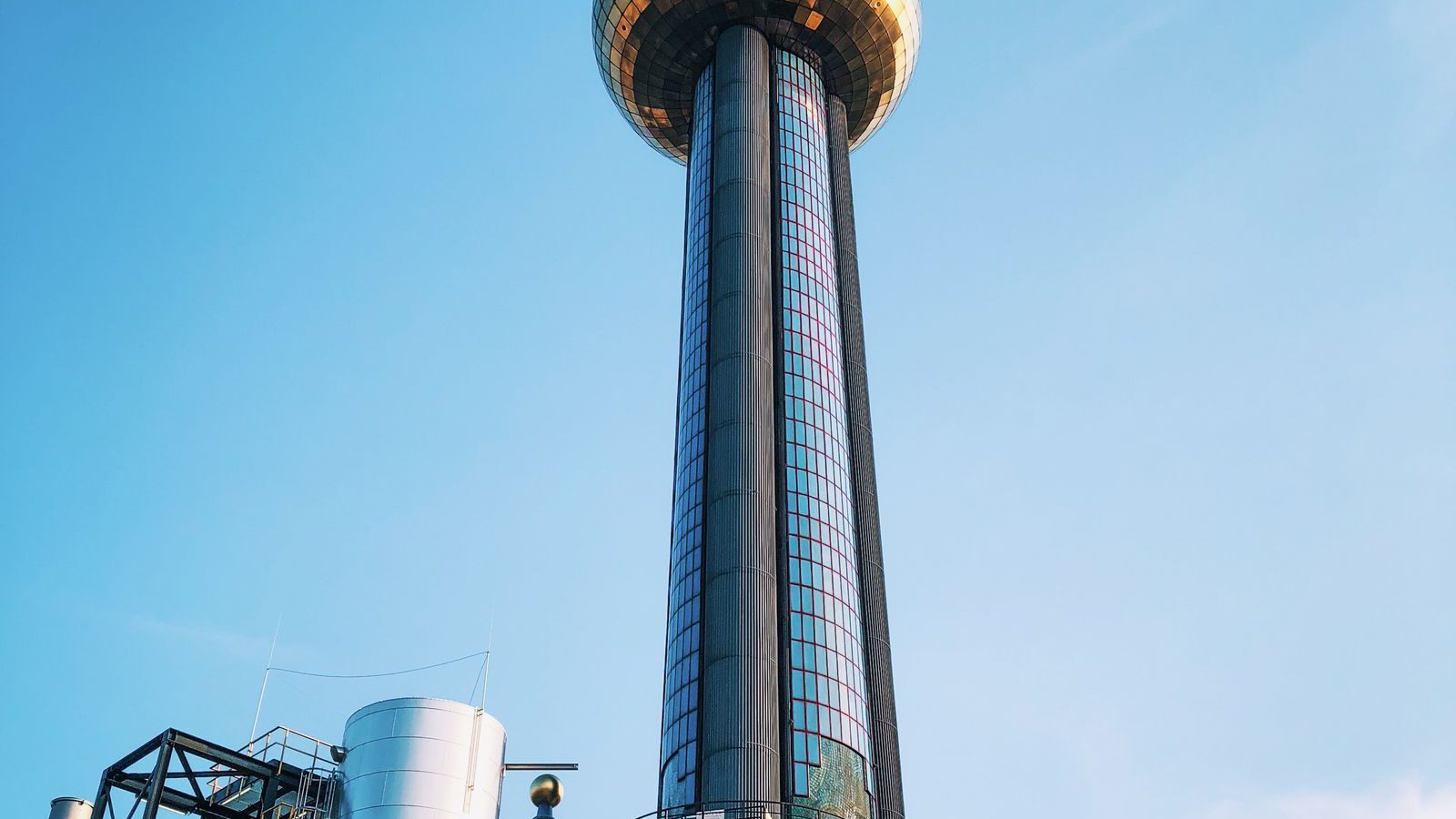
Fernwärme Spittelau is a working waste-to-energy plant that also happens to be one of Vienna’s most photographed buildings. After a 1987 fire, the city asked the artist Friedensreich Hundertwasser to reimagine the incinerator, and he covered it in his signature riot of colour, mosaic tiles, undulating lines, gilded flourishes and a shimmering golden ball perched on the chimney. Reopened in 1992, it still burns the city’s household rubbish and pipes district heating to tens of thousands of Viennese homes — a power station dressed as a fairy tale.
Is it worth visiting?
For a free, five-minute detour, yes — it’s a genuine one-off and a much easier Hundertwasser fix than the tourist-clogged Hundertwasserhaus and its “village” across town. You don’t go inside (it’s an operating plant, though occasional group tours run); the whole point is the exterior, best seen from the U-Bahn footbridge and the street below, where the golden ball and candy-coloured chimney rear up over the Danube Canal. Pair it with the idea it embodies: Vienna burning its trash to heat its flats, and making it beautiful.
How do you get there?
It could not be easier: the U4 and U6 lines both stop at Spittelau station, and the plant is literally beside the station — you’ll see the golden ball as you step off. Tram D and several buses also call nearby. It sits between the university district and Heiligenstadt, so it’s an easy add-on either on your way to the Kahlenberg vineyards or heading back into town.
When to go, and what it costs
Viewing the exterior is free and possible any time — it’s genuinely at its best lit up after dark, when the golden ball glows. If you want to see inside the plant, the operator Wien Energie occasionally offers guided tours of the facility; these must be booked in advance and aren’t always running, so check their site if a look at the furnaces appeals. For most visitors, ten minutes and a few photos from the footbridge is the whole experience.
Insider tip
Come at dusk. In daylight it’s fun; after sunset the illuminated golden ball and the mosaics against a dark sky are properly striking, and the U-Bahn bridge gives you a clean, elevated shot with no fences in the way. From here you’re a short ride or riverside walk from the Danube Canal path, a lovely low-key way to head back into the centre.