What is it, exactly?
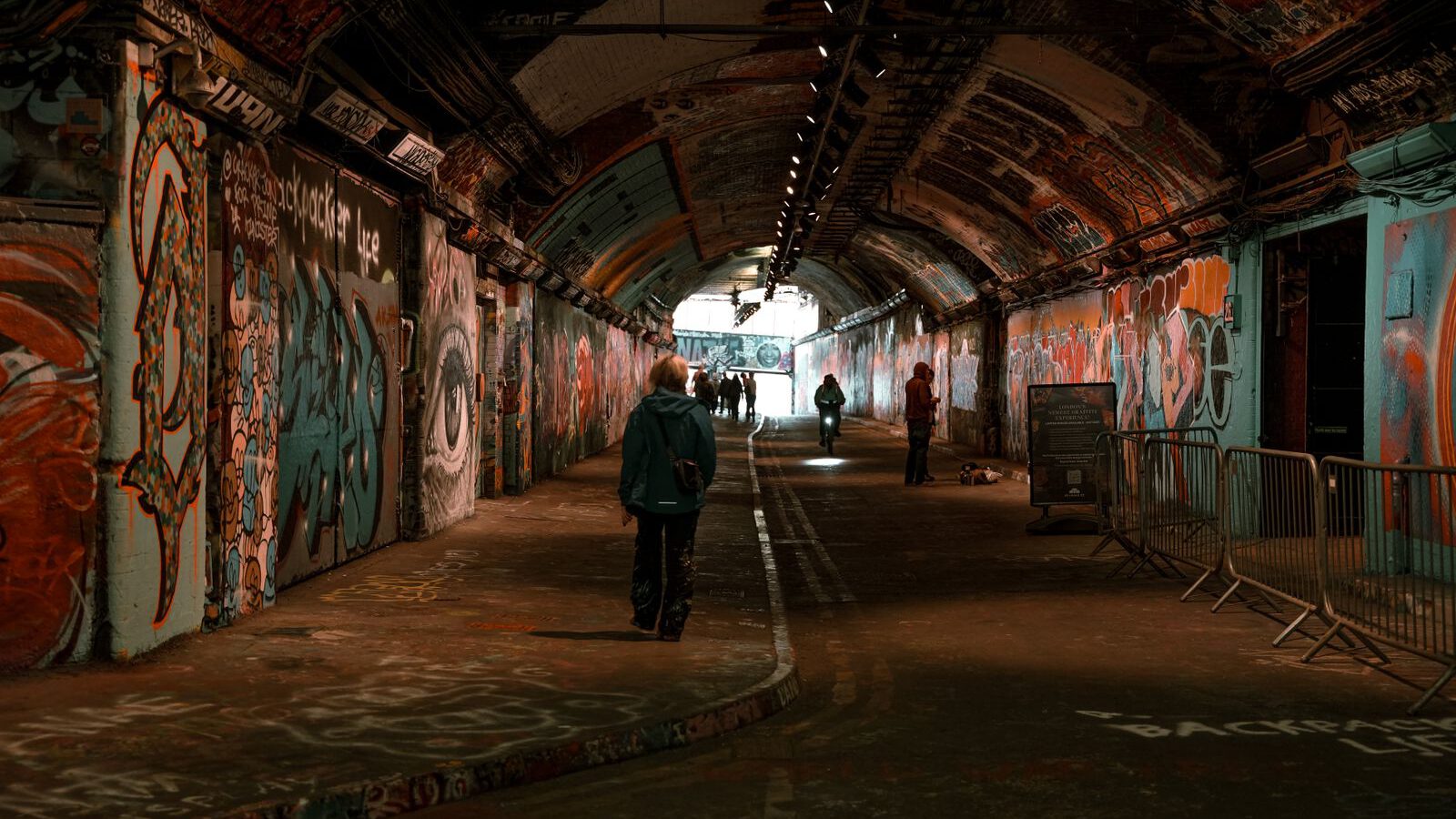
Locals call it the Leake Street Tunnel, the Banksy Tunnel or simply the Graffiti Tunnel. It runs for about 300 metres beneath the platforms of Waterloo, linking York Road to Lower Marsh, and every inch of wall, ceiling and pillar is fair game. This is London’s longest legal graffiti wall — paint here and nobody moves you on.
The tunnel’s reputation dates to May 2008, when Banksy curated the Cans Festival here and invited stencil artists from around the world to take over the walls. The side arches have since filled with independent bars, street-food traders and event spaces, but the tunnel itself stays free and raw — a working wall, not a preserved gallery.
Is it worth visiting?
If you have even a passing interest in street art, yes. Because the paint is refreshed so often — some pieces last months, others a few hours — it is one of the few London “sights” that is genuinely different every time you come. You are not looking at a frozen artwork; you are watching a living one.
Photographers love the low light and saturated colour, families come to watch the spray cans hiss, and — unlike almost every other central London attraction — it costs nothing and never closes.
How do you get there?
The tunnel is a five-minute walk from Waterloo (Bakerloo, Jubilee, Northern and Waterloo & City lines, plus National Rail) and from Waterloo East. Head out toward York Road and look for the ramp dropping down beside the station. From the other end, Lambeth North (Bakerloo line) is a similar short walk. Entrances are on York Road, Waterloo Station Approach and Lower Marsh.
When to go, and what it costs
Entry is free and the tunnel is open 24 hours. For the best chance of seeing artists actually painting, come on a weekend afternoon — that is when the wall is busiest with people working. It is fully covered, which makes it one of central London’s most reliable wet-weather options. The arch bars and food traders keep their own hours, mostly afternoons and evenings.
Insider tip
Walk the full length, then double back — the changing light and angle make different pieces stand out, and you will spot work on the ceiling and pillars you missed first time. If you want to photograph a specific piece, do it on the way in; there is a real chance it will be painted over by the time you leave. And check the arches’ event listings before you go: live “paint jams,” spray classes and pop-ups happen here regularly.