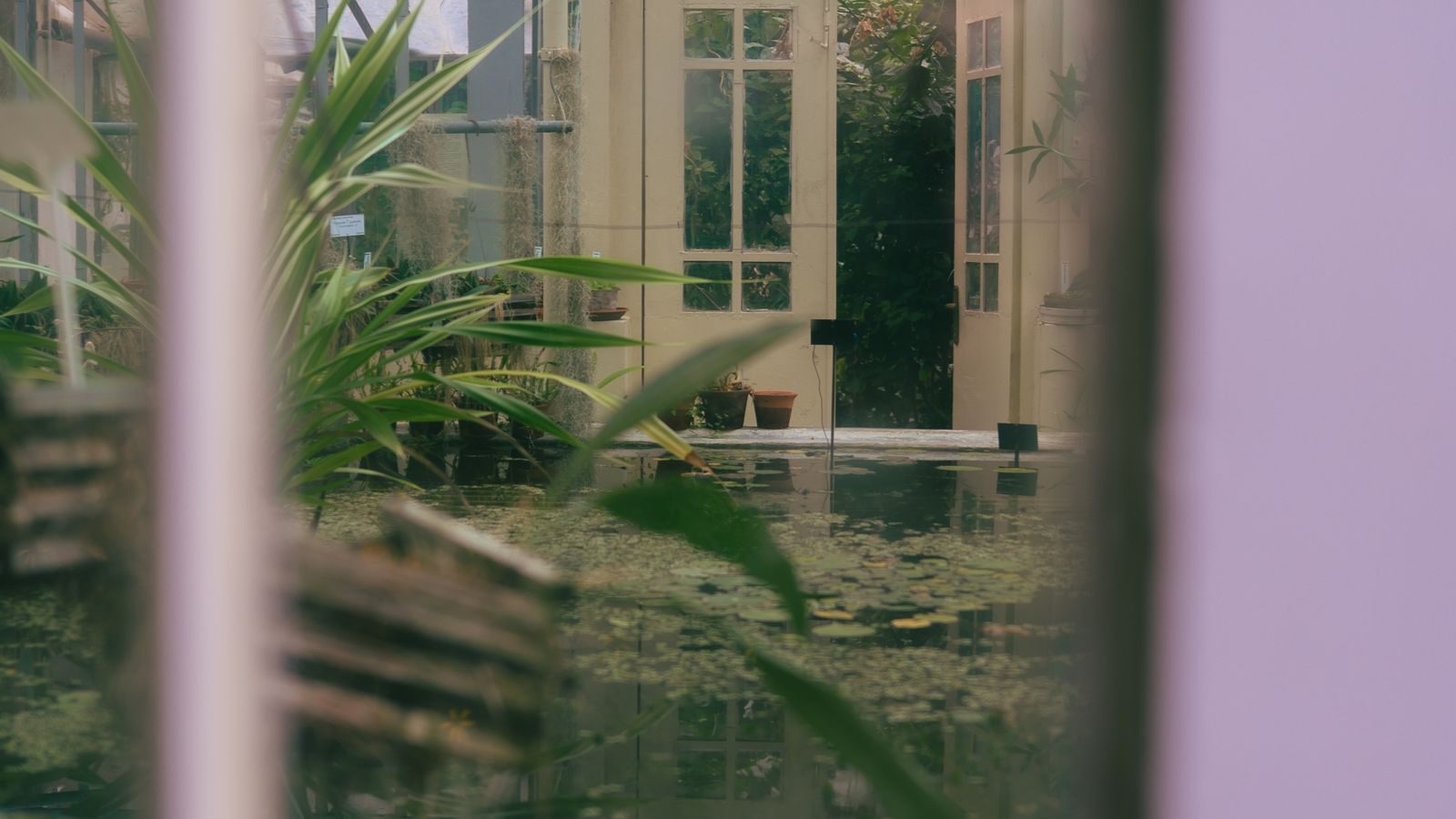
A short walk from Waterlooplein, behind a modest gate on the edge of the Plantage, sits a walled garden that has been growing since 1638. The Hortus Botanicus is one of the oldest botanical gardens in the world: barely more than a hectare of winding paths, ancient trees and glasshouses, holding thousands of plants from every corner of the globe. It is warm when the city is wet, green when the city is grey, and calm in a way the big-ticket museums never are.
A medicine garden that changed the world’s breakfast
The city council founded the garden in 1638 as a hortus medicus, a physic garden where doctors and apothecaries learned to recognise medicinal herbs, at a time when plague still swept through Amsterdam. In 1682 it moved to its present site in the Plantage, and as Dutch East and West India Company ships returned with seeds and cuttings, it became a living catalogue of the trading empire, with all the uncomfortable history that implies.
Its most famous export is a coffee plant. In 1706 the garden received a coffee plant grown on Java, and in 1714 the city sent one of its descendants to Louis XIV of France. Offspring of that plant were later carried to the Caribbean, and it is widely credited as an ancestor of much of the coffee grown in Central and South America. Today the garden squeezes some 4,000 species onto about 1.2 hectares, and you can still find coffee growing in the Butterfly House.
The glasshouses, one by one
- The Palm House. A listed glasshouse with an iron-and-glass dome, built in 1911 to a design by Johan Melchior van der Mey for the botanist Hugo de Vries. It shelters the garden’s cycads, including an Eastern Cape cycad (Encephalartos altensteinii) the Hortus puts at around 350 years old, plus two big fig trees said to have been planted by De Vries himself. Its 1,304 panes of glass are being replaced in phases, with completion expected in November 2026; the Hortus says the dome stays open to visitors most of the time.
- The Climate House. Long known as the Three-Climate Greenhouse, the garden’s largest glasshouse reopened in 2025 after a year-long renovation that made it the first sustainable, gas-free public greenhouse in the Netherlands. A route leads through jungle, desert and South African landscapes, with an exhibition on how climate shapes biodiversity.
- The Butterfly House. Tropical butterflies fly here all year among coffee, cocoa, tea, pepper, rice and sugar cane. Look for the chrysalis cabinet, where newly emerging butterflies are displayed before being released.
Outdoors, the medicinal garden nods to the original physic garden, and there are beds of carnivorous plants, a dunes-and-pond section and a kitchen garden. Allow one to one and a half hours, longer if you settle in at the café.
Tickets, card payments and a Museumkaart warning
The Hortus is open every day from 10am to 5pm, closed only on 25 December and 1 January. Adult tickets cost €14.75, while students with a card and children aged 5 to 17 pay €8.50 and the youngest children go free. You can buy online or at the gate, but note three things before you go:
- Card only. The Hortus does not accept cash.
- The Museumkaart is not valid here, unlike at most Dutch museums, but the I amsterdam City Card does give free entry.
- No lockers. There is nowhere to store suitcases or big backpacks, so do not come straight from the station with luggage.
If you would like the stories behind the plants, private guided tours for up to eight people can be booked at least two weeks ahead, in English, Dutch, French or German, for about €60 per guide on top of admission.
Getting there
The entrance is at Plantage Middenlaan 2A. The Hortus recommends tram 14 (towards Flevopark) to the Mr. Visserplein stop, which is only a couple of minutes’ walk away, or metro 51, 53 or 54 to Waterlooplein, using the Hortusplantsoen exit. Waterlooplein metro is wheelchair accessible; the Mr. Visserplein tram stop is not. By bike it is an easy, flat ride from anywhere in the centre.
Inside, the garden paths are gravel and narrow in places. The Climate House has automatic doors and is fully wheelchair accessible; the older glasshouses have thresholds and manual doors, so you may need a hand. A free wheelchair can be reserved, and there is an accessible toilet at the café, reached by a ramp behind the terrace.
When to go
The Hortus itself says the first hour after opening and the last hour before closing are usually the calmest, and that weekdays outside school holidays are quieter than weekends. A wet, cold day is the classic moment to come, because the tropical houses become the cosiest rooms in Amsterdam. Wear layers you can peel off, and give your camera or glasses a minute to clear when you step into the humid houses. In summer, the greenhouses can get genuinely hot and bright.
Around Christmas, the Hortus has recently held special winter evenings with later opening until 7pm, a campfire on the terrace and reduced late-afternoon tickets; check the website’s agenda for this year’s dates.
Around the Plantage
The Hortus sits at the start of one of the city’s prettiest, least hurried neighbourhoods. Artis zoo is next door, the Dutch Resistance Museum is a few minutes further along, and the Jewish Cultural Quarter, including the Portuguese Synagogue and the Jewish Museum, is right around Mr. Visserplein. Then keep walking east along the water and end the afternoon with an organic tripel under the windmill at Brouwerij 't IJ. If it is quiet green courtyards you are after, the hidden almshouse garden of the Begijnhof makes a fine counterpart in the old centre.